Former vice chair of China's securities regulator prosecuted for bribery

BEIJING, March 31 (Reuters) - China ‌has prosecuted ‌the former ​vice chair of its securities regulator ‌on ⁠charges of bribery, state ⁠news agency Xinhua ​said ​on ​Tuesday.

Reuters

Advertisement

After investigations, ‌Wang Jianjun was found to have abused the ‌advantages ​of ​his ​authority ‌to "secure benefits", Xinhua ​said.

(Reporting ​by Liz Lee ​and ‌Beijing newsroom; Editing ​by Christian ​Schmollinger)

Former vice chair of China's securities regulator prosecuted for bribery

BEIJING, March 31 (Reuters) - China ‌has prosecuted ‌the former ​vice chair of its securities regulator ‌on ⁠charges of b...
Killer cop or the wrong man? DNA halts Florida execution. For now.

When 11-year-old Teresa Mae McAbee was kidnapped, raped, strangled and drowned in the small Florida city of Mascotte nearly 40 years ago, a surprising suspect emerged: a rookie cop namedJames Duckett.

USA TODAY

The one undisputed fact of the case is that Duckett was on duty on May 11, 1987, when he encountered Teresa at a convenience store. The little girl had walked there to buy a pencil.

Duckett maintainsthat he told Teresa that she needed to go home, and that's the last time he saw her. Prosecutors argue that Duckett was a monster in disguise who abused the badge and brutally raped and killed Teresa before dumping her body in a lake.

Jurors accepted the state's narrative, convicting Duckett of murder largely based on circumstantial evidence and recommending the death penalty.

Now nearly 40 years later, DNA in the case stands to either save Duckett's life or seal his fate.

Duckett, 68, had been set to die by lethal injection at a Florida state prison on Tuesday, March 31. But with less than a week to go, the Florida Supreme Court issued a rare stay of execution pending the results of the DNA testing. And on Monday, March 30, the court upheld the stay, effectively stopping any chance that the execution would happen as scheduled.

Though the execution is on hold for now, it's not on hold for good.

As Duckett awaits his fate, USA TODAY is looking deeper at the case, the recent court actions and why the DNA hasn't been tested until now.

James Duckett had been scheduled to be executed on March 31 for the 1987 rape and murder of 11-year-old Teresa Mae McAbee.

What happened to Teresa Mae McAbee?

On May 11, 1987, the fates of 29-year-old rookie cop James "Jimmy" Duckett and 11-year-old Teresa Mae McAbee became intertwined.

Teresa had walked to her local Circle K convenience store to buy a pencil around 10 p.m. in Mascotte, Florida, a rural city just west of Orlando that had fewer than 2,000 residents at the time.

Duckett was on patrol for the Mascotte Police Department. The married father of two sons, who had been on the force for seven months, was making his regular rounds and stopped at Circle K, spotting Teresa talking with a 16-year-old boy outside the store, according to court records.

Duckett has always maintained that he talked to Teresa and the teen, telling each to go home. But the boy and his uncle later said that Duckett put Teresa in his patrol car and drove off.

Teresa's mother arrived at the Circle K around 11 p.m. looking for her daughter. The store clerk told her that Teresa may have gone with Duckett, and the mother began searching the area. When she couldn't find Teresa, she contacted police and later filed a missing persons report with Duckett, the only officer on patrol at the time.

The next morning, less than a mile from the Circle K, a fisherman found Teresa's body in Knight Lake. A medical examiner later found that she had been raped, strangled and was still alive when her attacker drowned her. Bodily fluid, presumably from the killer, was found on her underwear − DNA that was saved.

Duckett became a suspect when a sheriff's investigator, Sgt. Chuck Johnson, thought the officer was acting nervous at the scene of the body recovery, "was not curious about the death," and told a "rehearsed-sounding story" about his interaction with Teresa and the events of the night before. Duckett was charged with murder five months later.

What happened at James Duckett's trial?

At trial, prosecutors called James Duckett a "cold-blooded killer" and said that unlike him, Teresa didn't have a judge or jury.

"She had a police officer named Duckett pick her up and put her in the car and take her down to Knight Lake, and he sentenced her to be raped, and he sentenced her for threatening to tell on him and taking away his power, his almighty power of the badge," they told jurors, according to court records. "She threatened to tell when she was hurt … so he sentenced her to die. He served as executioner."

Among the state's evidence: a pubic hair found on Teresa that an FBI analyst said was consistent with Duckett's, Teresa's fingerprints on the hood of Duckett's car, tire tracks at the scene of the murder that police say matched Duckett's patrol car, and a key witness who testified that she saw Duckett drive off with a small person in his patrol car shortly after he spoke with Teresa.

Prosecutors also put three young women on the stand who testified that they were underage when Duckett sexually harassed or abused them.

Duckett's attorneys have been working to poke holes in the trial evidence, saying that Teresa's fingerprints were on the car hood because she sat on it at the Circle K, that a second hair found on the girl's body was inconsistent with Duckett's, and that Duckett's tire tracks were at the scene because drove there after the body was found.

Advertisement

They also argue that the state's key witness agreed to give bogus testimony in exchange for getting out of jail early and that there was no evidence to corroborate the stories of the three young women who testified that Duckett had been inappropriate with them.

Duckett's attorneys also argue that there were far likelier suspects in the case, including the teen Teresa was talking to before she vanished and various men who were boyfriends or friends of her mother's.

"For reasons beyond his control, James Duckett was chosen as the suspect, and other more likely suspects were allowed to walk away," his attorneys argue in court records. "Rather than find the real perpetrator, the state chose to proceed with a circumstantial evidence case against Mr. Duckett."

Just before he was sentenced to death, Duckett pleaded with the judge in the case to spare his life.

"I did not do this," he said, according to court records. "When the person who did this repeats it, I want to see the face of the person telling the victim's mother, father, sister or brother, 'I am sorry. We thought we had the right one before.'"

An execution scheduled, then stopped

After spending nearly 40 years on death row, James Duckett's execution was scheduled for March 31 after Florida Gov. Ron DeSantis signed his death warrant last month.

Duckett's attorneys fought to stop the execution so that DNA testing could be conducted on the semen collected from the crime scene. On March 26, the Florida Supreme Court agreed to issue a stay of execution pending results from the testing.

The results, which came in on March 27, were inconclusive, possibly because so little of the DNA collected was left to be analyzed. But Duckett's attorneys had argued that a different lab would be more likely to extract useable results.

The Florida Supreme Court could have lifted its stay because the initial results were inconclusive. Instead,the court decided to uphold it on March 30in a 6-1 ruling, stopping Duckett's execution for now.

The Florida Supreme Court heas oral arguments on March 4, 2026.

Duckett's attorney, Mary Wells, told USA TODAY that the stay was "a significant step toward preventing the irreversible harm that will result if the State of Florida executes an innocent man."

"DNA testing ... has the potential to conclusively establish Mr. Duckett's innocence," she said. "When the outcome of the results is whether a man lives or dies, there is no valid scientific basis for prohibiting a second examiner to analyze the results."

The state's Attorney General's Officehad argued in court thatthe stay should be lifted because the DNA results were inconclusive and that Duckett sought DNA testing far too late.

"Duckett waited until after a warrant was signed to seek DNA testing for a murder he committed over 38 years ago where he knew about the (DNA) slide at least since the relinquishment in 2003," they wrote. "But he did not seek DNA testing as soon as the science was sufficiently advanced. A truly innocent man would have sought ... DNA testing as soon as it was available."

More:Tennessee plans rare execution of a woman. She's fighting back.

What happens now?

In its orderupholding the execution stay, the Florida Supreme Court ordered Lake County Circuit Judge Brian Welke to provide the higher court with a status report by the end of day on April 2

Welke is expected to decide whether there should be further testing of the DNA. Welke is the judge who initially granted Duckett's request to test the DNA.

In his dissenting opinion to uphold the stay, Florida Supreme Court Justice Adam Tanenbaum wrote that Duckett's DNA fight amounts to "a Hail Mary pass" and that given the inconclusive test results, there is "nothing further for (Welke) to do at this point."

"Indeed, as has been the case for decades, there is no exonerating evidence at all to justify any further delay in the defendant's execution, which has been a long time coming," Tanenbaum wrote. "Justice for the victim and her family has been delayed far too long. The defendant's time is up."

Amanda Lee Myers is a senior crime reporter who covers cold case investigations and the death penalty for USA TODAY. Follow her on X at @amandaleeusat.

This article originally appeared on USA TODAY:Killer cop or the wrong man? DNA halts James Duckett's execution

Killer cop or the wrong man? DNA halts Florida execution. For now.

When 11-year-old Teresa Mae McAbee was kidnapped, raped, strangled and drowned in the small Florida city of Mascotte near...
Meth-laced hot dogs have twice sickened a family's pups. Police don't know who's responsible or why

Police in Colorado are investigating after they say a family's pooches were sickened by methamphetamine-laced hot dogs placed in their backyard going back months.

NBC Universal Jillian Frank and her dog, Gable. Gable and another of the family's dogs, Murray, have been sickened by what police said are methamphetamine-laced hot dogs being placed in the family's yard, and no one knows who's responsible. (KUSA)

Investigators believe someone is targeting the pets following the incidents dating back to November, the Broomfield Police Department saidon Facebook. On two of those occasions, the dogs ingested the meth and became sick, police said.

Jillian Frank told NBC affiliate KUSA of Denver that the strange ordeal began when her mother, a vegetarian, found a hot dog on her patio in Broomfield, a city about 18 miles northwest of Denver, and "cracked it open." It contained a crystal-like substance that police said later tested positive for meth.

Frank said the family at the time chalked it up to a random case of animal cruelty.

"She has no enemies or conflict. She doesn't have any neighbor conflicts," Frank said of her mother. "We just kind of assumed this was a random, malicious act of animal cruelty."

But things escalated not too long after.

Advertisement

A second incident was reported roughly a month later, on Dec. 26. Frank said she took her dog, Gable, to the vet after she noticed him acting strangely after he'd eaten something from the yard.

"He wont stop circling, he won't stop panting, he won't lay down," Frank recalled. A test came back positive for meth, she said.

Police said the most recent incident happened on March 22. This time it involved Frank's sister, Annalyn, and her dog, Murray.

Annalyn Frank said she took Murray to the vet after she noticed him "just spinning in circles and foaming at the mouth." A urinary test came back positive for meth and the psychedelic MDMA, she said.

Neither the family nor police know why anyone would want to target the dogs, but the ordeal has prompted the family to install security cameras around the home, along with high netting along the fence.

The sisters said their mom is now planing to move out.

"This was finally her safe space, and it's just been ripped away from her for no reason," Jillian Frank said.

Meth-laced hot dogs have twice sickened a family's pups. Police don't know who's responsible or why

Police in Colorado are investigating after they say a family's pooches were sickened by methamphetamine-laced hot dog...
NBA approves $4.25B sale of Trail Blazers to group led by Carolina Hurricanes owner Tom Dundon

The NBA announced on Monday that it's approved the sale of the Portland Trail Blazers to a group led by Carolina Hurricanes owner Tom Dundon.

Yahoo Sports

Per the league, the sale is expected to close this week. Dundon will serve as the team's governor.

Dundon reached an agreement to purchase the teamfrom the estate of late owner Paul Allen in August. Per multiple reports, the team is being sold at a $4.25 billion valuation.

Allen, who co-founded Microsoft, previously owned the Trail Blazers from 1988 untilhis death in 2018. Hepurchased the team for $70 millionin 1988. The team has since been run by his his estate, which is managed by his sister, Jody Allen.

Advertisement

Allen's will dictatedthat the team be sold after his death and for the proceeds to go toward philanthropic ventures. Now that sale is final and approved by the NBA. It's not clear what philanthropic efforts the proceeds will support.

Who is Tom Dundon?

Dundon, 54, purchased a majority stake in the NHL's Carolina Hurricanes in 2018, and the franchise has experienced success under his leadership.

The Hurricanes have made the playoffs in each year from 2019-25, making the conference finals three times. Prior to the 2018-19 season, the Hurricanes missed the playoffs for nine consecutive years.

Per the Oregonian, Dundon built his fortune in the supbrime auto lending industry as the co-founder and eventual CEO of Drive Financial, which later became Santander Consumer USA. Heleft the company in 2015 with more than $700 millionand nowruns the Dallas-based investment firm Dundon Capital Partnersin addition to his sports ownership ventures.

Dundon is also majority owner of Major League Pickleball and the PPA Tour.

NBA approves $4.25B sale of Trail Blazers to group led by Carolina Hurricanes owner Tom Dundon

The NBA announced on Monday that it's approved the sale of the Portland Trail Blazers to a group led by Carolina Hurr...
Mullins' Miracle: How does his shot for UConn measure up to other famous ones in March Madness?

WASHINGTON (AP) — A couple of days ago, Braylon Mullins was a UConn freshman whose name carried weight mostly among the true diehards — college basketball junkies and Indiana high school hoops enthusiasts.

Associated Press UConn guard Braylon Mullins (24) scores the winning basket during the second half against Duke in the Elite Eight of the NCAA college basketball tournament, Sunday, March 29, 2026, in Washington. (AP Photo/Abbie Parr) FILE - Duke's Christian Laettner, center, celebrates his game-winning shot against Connecticut in the NCAA East Regional Final at East Rutherford, N.J., on March 24, 1990. In the background is teammate Bobby Hurley. (AP Photo/Susan Ragan, File)

APTOPIX NCAA UConn Duke Basketball

Now he's a part of NCAA Tournament lore. That's what can happen at this time of year.

"One of the most brilliant shooters you'll ever see shoot a basketball made an incredible, legendary March shot," Huskies coach Dan Hurley said.

Mullins'35-footer with 0.4 secondsremaining lifted UConn over Duke 73-72 in the Elite Eight on Sunday, and now that the dust has settled, it's time to evaluate just how legendary — as Hurley put it — this shot was.

The bar for last-second game winners is actually higher in the women's tournament, where North Carolina's Charlotte Smith once madea 3-pointer at the buzzerto win the national title game by one in 1994. And who can forget Notre Dame's Arike Ogunbowale winning boththe semifinaland finalin 2018 with tiebreaking jumpers?

On the men's side, it's a little more complicated. There are several factors to consider when determining the best of the best.

Time and score

Last-second shot means last-second shot. Michael Jordan'sgame winnerfor North Carolina in the 1982 title game was memorable because of who shot it, but it also left plenty of time for a very ill-fated Georgetown possession at the other end.

Still, Mullins' 3 doesn't lose any luster because there were 0.4 seconds left when it went in. It wasn't literally at the buzzer, but that's close enough.

Sports Reference helpfully compileda databaseof game-winning buzzer-beaters from NCAA Tournament history. The site requires a shot to be in the last 2.0 seconds to make the list — with some leeway for the era before the clock stopped after made baskets at the end. Only game winners are included. Tying the score and forcing overtime, with apologies toKentucky's Otega Oweh, isn't quite in the same category.

Mullins also gets bonus points because if his shot misses, UConn loses. As incredible asKris Jenkins' 3-pointerat the buzzer was when it won Villanova a championship in 2016, the game was tied at the time, so the worst-case scenario for his team was overtime.

Significance of the game

Buzzer-beaters are a big part of what makes March Madness special, but as much as the first couple of rounds create the tournament's charm, it's the second weekend and beyond when the national championship starts to feel within reach. So last-second shots take on added importance.

According to the Sports Reference list, prior to Mullins there were just 16 instances in the men's tournament — in the Sweet 16 or later — in which a team was trailing before winning with a last-second shot:

— Jack Shelton's shot for Oklahoma State to beat Wyoming in the 1949 quarterfinals.

— Pembrook Burrows' tip-in for Jacksonville against Iowa in the 1970 round of 16.

— Richard Washington's shot for UCLA to beat Louisville in the 1975 national semifinal.

— Danny Ainge goingcoast-to-coastfor BYU against Notre Dame in the 1981 round of 16.

— Mike Jones' shot from the perimeter to lift Wichita State over Kansas in the 1981 round of 16.

Advertisement

— Kevin Gamble's jumper for Iowato beat Oklahomain the 1987 round of 16.

— Keith Smart'sbaseline jumperfor Indiana to beat Syracuse in the 1987 title game. This shot went through the hoop with around 4 seconds left, but a timeout didn't stop the clock until there was 1 second remaining.

— Anderson Hunt's 3-pointer that gave UNLV a one-point win over Arizona in the 1989 round of 16.

— Tate George'sturnaround at the buzzerfor UConn against Clemson in the 1990 round of 16. (Bookmark this one for now.)

— Christian Laettner'sshot at the buzzerfor Duke that beat UConn in the 1990 regional final.

— Laettner again,at the buzzerto beat Kentucky in the 1992 regional final.

— Cameron Dollar's shot for UCLA against Iowa State in the 1997 round of 16.

— Richard Hamilton'sfadeaway at the buzzer— after multiple offensive rebounds — that gave UConn a win over Washington in the 1998 round of 16.

— Chris Chiozza'srunning 3-pointerat the buzzer for Florida that beat Wisconsin in the 2017 round of 16.

— Kyle Guy makingthree consecutive free throwsfor Virginia with 0.6 seconds left to beat Auburn in the 2019 national semifinal.

— Lamont Butler'sjumper at the buzzerfor San Diego State to beat Florida Atlantic in the 2023 national semifinal.

You can see there aren't many 3-pointers on that list — but there are two other UConn players in George and Hamilton. Now Mullins joins them, and his shot came a round later.

Degree of difficulty

Mullins' shot wasn't quite as far as the midcourt heaves by U.S. Reed of Arkansas (1981 second round vs. Louisville) andPaul Jesperson of Northern Iowa(2016 first round against Texas). The more apt comparison, in terms of distance, is with Jalen Suggs'buzzer-beating bank shotfor Gonzaga against UCLA in the 2021 semifinal, although that game was tied before the winning play.

It's also worth considering the difficulty of the entire sequence. George's shot in 1990 required UConn to go the length of the court in 1 second, an impressive throw-catch-shoot sequence in which almost everything had to go perfectly. Baseball draft pick Scott Burrell made the long pass for the Huskies. Duke had 2.1 seconds to set up Laettner in '92, with Grant Hill throwing the ball down the court to him.

The legacy

The reason Laettner's shot in 1992 stood the test of time is because it was the defining moment of a second straight NCAA title run for Duke. And obviously, the game winners by Jenkins and Smart decided national championships on the spot. If UConn doesn't win it all this year, maybe Mullins' 3 falls back to a slightly lower tier, but if the Huskies do prevail in Indianapolis, it'll be their third national title in four years. That's something not even Duke has done before.

And it's only possible because of Mullins' Miracle.

AP March Madness bracket:https://apnews.com/hub/ncaa-mens-bracketand coverage:https://apnews.com/hub/march-madness

Mullins' Miracle: How does his shot for UConn measure up to other famous ones in March Madness?

WASHINGTON (AP) — A couple of days ago, Braylon Mullins was a UConn freshman whose name carried weight mostly among the t...
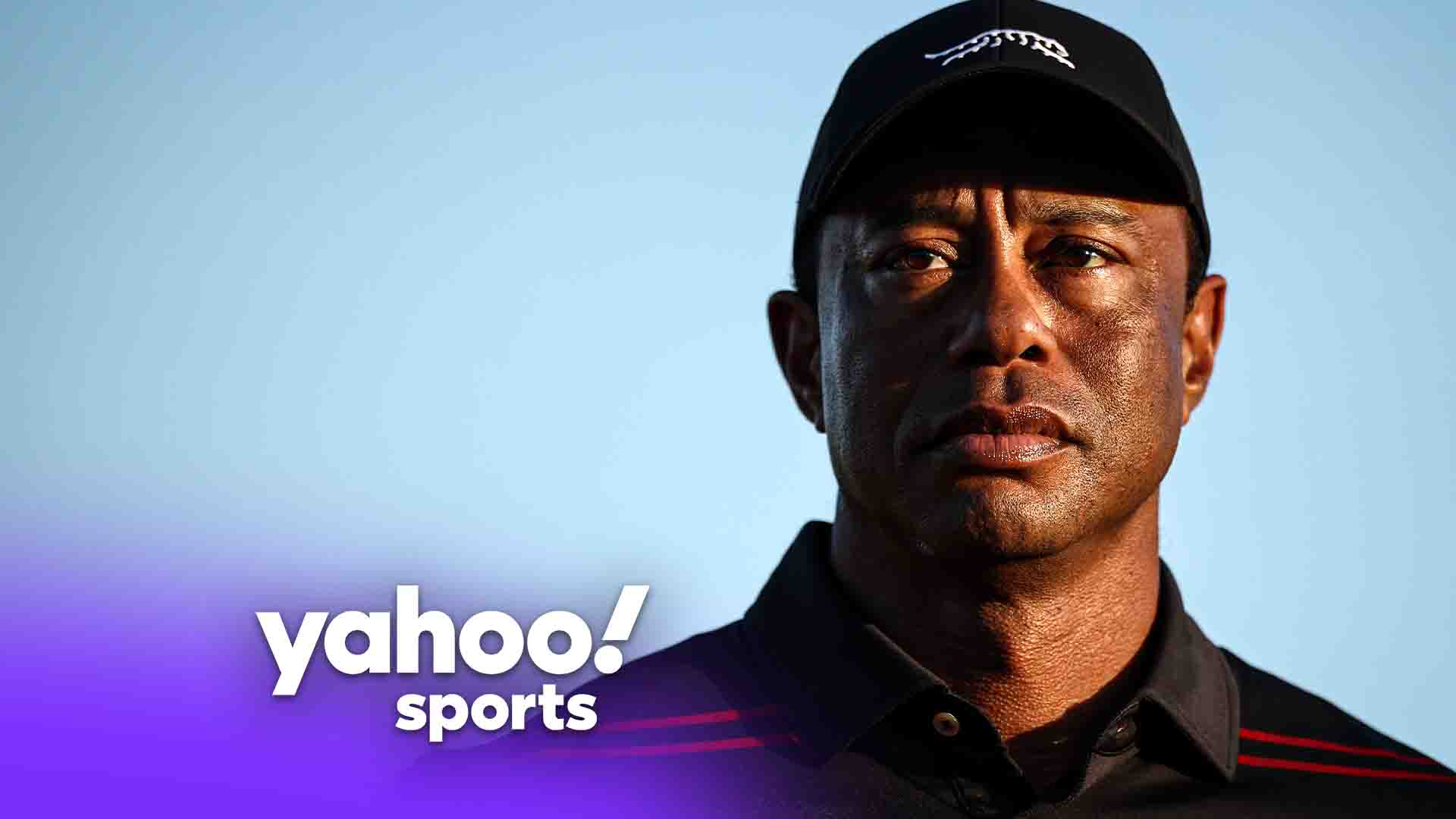
Tiger Woods doesn't belong anywhere near the Ryder Cup in 2027

In the wake of hisFriday afternoon wreck and DUI arrest in Florida, Tiger Woods faces massive challenges in both his personal and professional lives. One challenge he shouldn't face: the question of whether he should captain the Ryder Cup team.

Yahoo Sports

Yes, at a time like this, when Woods is facing literal jail time after his arrest on suspicion of DUI, the question ofHow This Will Affect Golfis borderline irrelevant. But it's a critical question nevertheless, because the sway that Woods has held over the sport of golf, and the way that the sport of golf has sheltered Woods, are key factors that led to Friday's rollover accident.

Quite simply, Woods is not fit to spend the next 18 months as the face of the United States Ryder Cup team. Whether you think Woods has disgraced himself, endangered himself, or merely embarrassed himself, the end result is the same. This is a man who should be working on himself and his life, not drawing up potential pairings for a Friday fourball session.

Sure, this upends what had been a long-term succession plan … but that's what wrecks tend to do.

For roughly two decades now, conventional wisdom has held that Woods would eventually become a Ryder Cup captain, as virtually all American and European greats of the game eventually do. (Of course, conventional wisdom also held that Phil Mickelson would one day captain the United States, and that now seems about as likely as you or me getting the call.)

Woods was asked to captain the 2025 team. He declined, citing the demands on his time presented by his role as a leading member of the PGA Tour's Player Advisory Council. The job went to Keegan Bradley instead, and, well,we saw how that turned out.

Earlier this year, Woods revealed that the PGA of America had reached out to him about the captaincy, but was characteristically evasive about specifics: "They have asked me for my input on it, and I haven't made my decision yet," hesaid at the Genesis Invitationalin February.

Since then, he's made his decision — or, more accurately, made other decisions that should foreclose this one.

STUART, FLORIDA - MARCH 27: Tiger Woods is driven from the Martin County Jail after being arrested for driving under the influence after a car crash on March 27, 2026 in Stuart, Florida. The Martin County Sheriff's Office said that Woods and the other driver involved in the two-car crash in Jupiter Island, Florida, were not injured. (Photo by Joe Raedle/Getty Images)

Let's put aside the very real question of whether Woods would even make a good captain from a strategic perspective. Woods played in eight Ryder Cups from 1997 to 2018, amassing an all-time record of 13-21-3. As a member of a team, he was just 9-19-1, and the U.S. as a whole was only 1-7 when he was on the roster. Team sports weren't really Tiger's bag, and "played good golf once" isn't the only barometer for whether a player will transition into being a great captain.

Advertisement

What does make a great captain? There are two philosophies.

The first is to treat it like a fantasy football team owner, running out pairings of the best players and letting them do their thing, throwing in a little pep talk every now and then via golf cart. This has been the Americans' usual strategy in this century. It's been uneven at best.

The second is to micromanage every element of the Ryder Cup experience, from the order of events to the length of the rough, from the pre-match party schedule to the shampoo in players' rooms. This has been Luke Donald's style, and it's a key reason why the Europeans have throttled the U.S. in so many recent Ryder Cups.

Right now, Woods definitely isn't a fit from an optics perspective and, considering the issues he has outside the ropes, not from a procedural one, either.

The margins for Ryder Cup victory are so slim that the tiniest edges matter. At the celebratory post-Ryder press conference last year, Donald told the story of how he ensured that light from the outside hallway wouldn't shine under players' hotel room doors so that they could get their sleep. Obsessive? Unnecessary? Maybe, but who's to argue with results?

Perhaps Woods could have devoted the necessary time to the American Ryder Cup effort to match Donald's. Perhaps he could have pored over data and statistics, forecasts and catering menus to give the United States the best possible chance of winning on foreign soil. But even before his wreck, it sure didn't seem like Woods had that kind of time.

"I'm trying to figure out what we're trying to do with our tour," Woods said in February. "That's been driving me hours upon hours every day and trying to figure out if I can actually do our team, our Team USA and our players and everyone that's going to be involved in the Ryder Cup, if I can do it justice with my time. Serving on two boards, and what I'm doing for the PGA Tour, I'm trying to figure out if I can actually do this and serve the people that are involved and serve them at an honorable level."

Which brings us back to the second half of the equation: the optics of hiring a clearly struggling Woods as the face of the United States' Ryder Cup endeavors. Regardless of whetherWoods is able to avoid legal recriminations arising from his wreck, the fact remains that this isn't the first time Woods has been in a serious incident involving a motor vehicle. It's a borderline miracle that Woods has only harmed himself — plus a fire hydrant and several vehicles — in his publicly known auto accidents.

Even the most generous reading of Woods' situation is that of a man not fully in control of his own life right now. The best thing the PGA of America could do for Woods would be to remove his name from consideration for the Ryder Cup captaincy and — privately if necessary — encourage him to get the help he needs to get his life back on track. This is the ultimate bigger-than-golf moment, and Woods clearly needs all the help he can get, even if he's not willing to ask for it himself.

Tiger Woods has plenty of opportunities left to captain the United States Ryder Cup team, but 2027 shouldn't be one of them.

Tiger Woods doesn't belong anywhere near the Ryder Cup in 2027

In the wake of hisFriday afternoon wreck and DUI arrest in Florida, Tiger Woods faces massive challenges in both his pers...
Dakota Johnson says she once failed an audition by being polite: 'I was like: What?'

IsDakota Johnsontoo friendly to be an actress? She thinks that's true in at least one case.

Entertainment Weekly Dakota Johnson in JanuaryCredit: Swan Gallet/WWD via Getty

"I had an audition once, and it was a callback, and I went into the room, and I shook everyone's hand and introduced myself. Then I did the scene, and I left," Johnson toldHits Radio. "The feedback I got was that because I had gone and introduced myself and shook everyone's hand is that I was pompous. That I was schmoozing, and I was full of myself."

Get your daily dose of entertainment news, celebrity updates, and what to watch with ourEW Dispatch newsletter.

TheFifty Shades of Greyactress was perplexed.

"I was like: 'What?' I didn't get the job because they said that I was being cocky," she recalled. "But I just had manners… It was pretty crazy."

The actress has since enjoyed much more positive developments in her career, including not just playing Anastasia Steele toJamie Dornan'sChristian Grey inFifty Shades of Grey, but movies such asMaterialists,Splitsville, andHow to Be Single.

Advertisement

Johnson has noted that she'd like toportray a psychopathand do an action movie in the future.

"I'm open to anything," she told reporters in July at the Karlovy Vary Film Festival in the Czech Republic, perVariety. "Certain things [just have] to align."

Dakota Johnson attends the Los Angeles premiere of 'Splitsville'Credit: Emma McIntyre/Getty

And that goes beyond acting. Johnson, the daughter of Oscar-nominated actressMelanie Griffithand Emmy-nominated actorDon Johnson, is also a producer through her TeaTime Pictures. Her producing credits also includeAm I Okay?andDaddio.

"So much of why I wanted to start a production company and make my own movies is because I want more from this industry," Johnson told Variety. "I want more from my experience as an artist. I felt so thirsty for more conversation and more creativity and more collaboration. I found myself as an actor, a few times, showing up to the premiere of a movie to see it the first time and saying, 'Woah. That is not what I thought we were making.'"

She described that as "such a weird thing to do."

Read the original article onEntertainment Weekly

Dakota Johnson says she once failed an audition by being polite: 'I was like: What?’

IsDakota Johnsontoo friendly to be an actress? She thinks that's true in at least one case. "I had an...


COSMO NEWS © 2015 | Distributed By My Blogger Themes | Designed By Templateism.com