
LIVIGNO, Italy — The original concept of the Winter Olympics was simple. In the early 1920s, a movement was born within the International Olympic Committee to designate a week for celebrating sports on snow and ice. By 1964, it had grown to more than 1,000 athletes in 34 events.

Three decades later, the Winter Games moved to a new schedule so that they no longer took place in the same year as the Summer Olympics. More recently, they've evolved to add more modern, youth-focused sports like snowboarding and freestyle skiing.
All the changes, however, have failed to solve one of the major issues inherent to winter sports: Except for a small handful of athletes who are mostly from mountainous European countries, the Winter Games lack diversity and star power. Even in the U.S., it's the rare athlete like a Lindsey Vonn or Shaun White that can break through into the mainstream conversation.
That's why the Winter Olympics needs to tweak its criteria and include the most popular winter sport in the world.
It's time to take basketball out of the Summer Games and put it where it belongs.
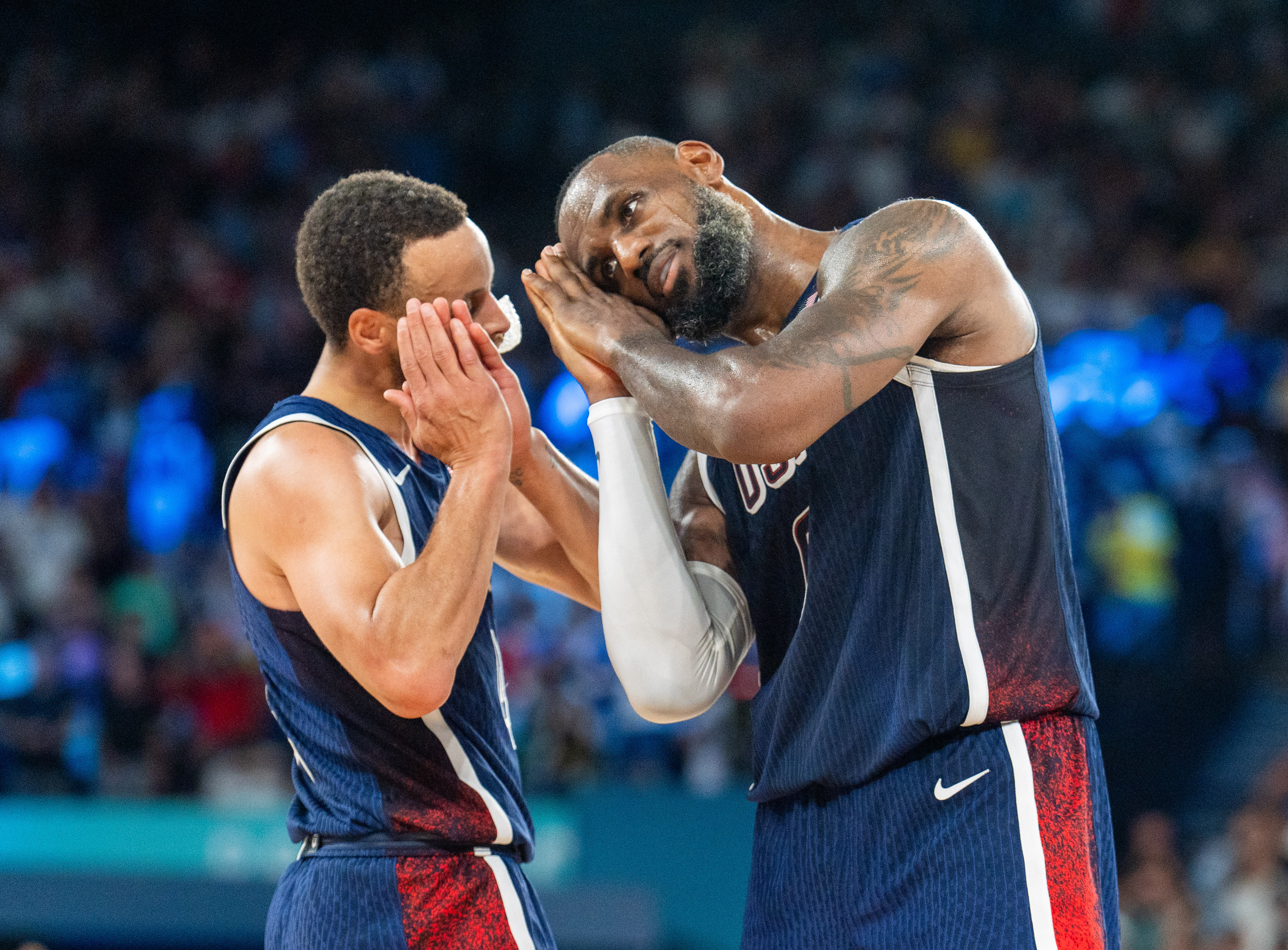
Basketball is, of course, not a winter sport by the IOC's definition because it's played indoors with no ice or snow to be found. But the rules can change when it's convenient for the IOC. Heck, this is an organization that put recent Winter Olympics in places like Sochi, Russia — a beachside resort where the temperature rarely gets below 40 degrees — and Beijing, where the climate is so dry they had to manufacture snow.
If they wanted basketball to be a Winter Olympic sport, they could easily manufacture a rule change that would allow it to happen. Is the sport played and watched in winter? OK, you're good to go!
And the IOC should push for that because it would significantly enhance the allure of the Winter Games to a worldwide audience while taking very little excitement away from summer, where basketball often seems like an afterthought.
As great as the basketball tournament has been, particularly at the last two Olympics with countries like France and Serbia mounting significant challenges to Team USA, fighting for attention with track and field, gymnastics, swimming and the rest is difficult. There's simply too much going on, particularly as the Summer Games have become bloated with events.
Two years ago in Paris, there were 329 medal events across 32 sports with more sports being added all the time like sport climbing in 2024 or flag football in 2028. This year in Milan Cortina, there will be 116 medal events in 16 sports. The Winter Olympics can grow only so much if you're restricting it to sports that require snow or ice to compete.
Maybe that works now for the IOC, but is it a sustainable strategy for the future?
If the IOC isn't concerned about TV ratings, particularly in the U.S., they should be. NBC's coverage in 2022 averaged 11.4 million viewers across all its platforms, down from 19.8 million in 2018. That was already down about 7% from Sochi in 2014.
Advertisement
There's probably some statistical noise in that trend line due to time zone issues (holding the last two Winter Olympics in China and South Korea was a disaster for American viewers), as well as the bad vibes surrounding 2022 with Beijing still in the midst of a full COVID lockdown. At that point Americans were tired of talking about it, but it was impossible to flip on an event, see empty stands and not think about the pandemic.
Interest has bounced back and ratings are reportedly up with a more traditional Winter Games set in the Italian Alps and event times that are more conducive to American viewership. It's also helps significantly that NHL players have returned to the men's hockey competition for the first time since 2014.
But over the long haul, the Winter Olympics are just too limited, philosophically and geographically, to grow viewership with younger demographics.
Outside of Europe, the U.S. and Canada, participation is sparse. Adding the X Games sports has brought in some athletes from Australia and New Zealand, while Japan, China and South Korea usually have a big presence in skating events. But South America, Africa, the Middle East and even some large population countries like Spain (14 athletes at 2022 Games), Brazil (10) and Mexico (4) are practically absent.
That's always going to be a challenge for the IOC. It's hard to build a viewer base for winter sports in places that don't have much winter.
But that's also why it makes so much sense to take basketball — a sport that reaches all corners of the globe — and give it the Olympic showcase it deserves at a time of year when fans are used to watching the NBA and the various leagues around the world.
Suddenly, Argentina is interested. Australia and Greece are involved. The South Sudan story was huge in Paris and it would be even bigger in this context simply because of what it would mean for awareness of the Winter Games across the entire African continent.
Also, no disrespect to any athlete getting ready to compete in Milan Cortina, but the Winter Olympics just doesn't have as many big, worldwide stars as the Summer Games. Yes, every speed skater is famous in the Netherlands, the Germans love their bobsledders and cross-country skiers are huge in Norway. But those are niche sports and niche markets. Having a Giannis Antetokounmpo, Nikola Jokic or Caitlin Clark bring mainstream appeal to the Winter Olympics would be transformative.
Such a huge change, of course, would require a lot of cooperation from the NBA and European leagues to pause their seasons in February. It would probably be difficult to find many NBA owners who want to send their star players away for a couple weeks and risk injury before the stretch run.
Admittedly, it's a lot to ask. But the NHL has managed to do it, and the upside is that it wouldn't require NBA players to devote such a huge chunk of their offseason in Olympic years going to training camps and playing exhibition games before the actual event. If the NBA was willing to tweak its schedule to allow for it once every four years, there would be clear momentum coming out of the Olympics that might even reengage some casual fans before the playoffs.
At the end of the day, basketball is just not needed at the Summer Olympics. There is already so much to consume, you could remove it entirely and few would notice. It would, however, transform the Winter Games into a more global event that could comfortably share the stage with its traditionally popular offerings like figure skating and hockey.
The Olympic movement always evolves. Its next big move should be placing the world's most popular winter sport in the Winter Olympics.
