ICE officers aren't trained in airport security. Can they help ease long lines?

WASHINGTON (AP) — Immigration and Customs Enforcement officers have beendeployed to select airportsacross the country, where they are meant to help mitigate long lines fueled bystaffing shortfallscaused by a partial government shutdown.

Associated Press

But ICE officers arenot trained in aviation safetyand their central role in President Donald Trump'scontentious immigration enforcement agendais raising questions about how effective their assistance might be in easing wait times — and whether it could stoke tensions with travelers.

The government has given few details on what immigration officers will do and Trump has suggested that airports were "fertile ground" for immigration enforcement, although he said ICE was only there to help.

ICE officers on Monday were seen standing near security lines and checkpoints and so far were not screening passengers. Long wait times continued at some airports.

Analysts who follow the industry say there are limits to how much ICE can really assist.

An imperfect solution to a staffing crunch

Substituting ICE for Transportation Security Administration workers is an imperfect solution for an increasingly dire travel situation, said Keith Jeffries, a former head of TSA security at Los Angeles International Airport.

"Can they do some of the duties? Perhaps," said Jeffries, who is now a vice president at K2 Security Screening, which installs airport equipment.

"There is just zero chance for them to be operating X-rays, conducting bag checks and pat-downs," said Jeffries, saying that TSA agents receive lengthy classroom training in security screening procedures, followed by "weeks or months" of on-the-job training.

Trump's border czar Tom Homan on Sunday said immigration officers could staff exit lanes, freeing up some TSA agents to work security.

Zach Griff, author of the travel industry blog "From the Tray Table," said he was "encouraged" by the potential of using ICE officers to assist TSA although he stressed that he didn't see their deployment as a real solution to the problems at airports.

Like Jeffries, he stressed that it's much harder to integrate ICE officers or anyone else into baggage screening, which is the core of what TSA agents do.

"That is a specialized training process that the TSA goes through with all of its agents. That's not something that they can just kind of spin up," Griff said.

ICE officers receive specialized training of their own that has little to do with airport security.

ICE includes Homeland Security Investigations agents and deportation officers with Enforcement and Removal Operations. Both receive basic training in areas like firearms and driving, but deportation officers focus on immigration law, while HSI agents train for longer, complex criminal investigations, and some work within airports.

Advertisement

ICE officers and their tactics, including aggressive arrest sweeps and the expansion of certain powers to make arrests, have come under fierce scrutiny since the Trump administration launched immigration crackdowns in multiple cities last year.

ICE presence at airports could stoke tensions

ICE officers could help provide crowd control for the mammoth security lines that in recent days have wound around airport terminals and spilled outside buildings, said Jeffries.

But ICE's presence, Jeffries noted, could invite protesters who have sometimes dogged their enforcement actions, which could pull even more airport security resources away from passenger screening. Notably, on Sunday, Lauren Bis of the Department of Homeland Security cited security reasons for declining to disclose which airports would have ICE officers the next day.

Bringing ICE officers, who are typically armed, into the airport at a time when tensions are high over immigration enforcement might not sit well with a lot of people, Griff noted.

"There are going to be people who are going to be uncomfortable seeing ICE agents at the airport," said Griff.

Trump on Monday suggested there could be immigration arrests at airports, which he called "fertile territory" for ICE's operations. But, he added, "that's not why they're there, they're really there to help."

ICE is at the center of the partial shutdown

Trump also waded into a central issue fueling the funding battle in Congress —masks worn by ICE officers. In a social media post Monday, Trump said he supports officers wearing masks when arresting "hardened criminals," but said he would "greatly appreciate, however, NO MASKS" when helping alleviate problems at the airports.

Masks worn by ICE officers have become a flashpoint of controversy in the immigration debate. Critics say masks allow ICE officers to hide from accountability if they violate people's rights. ICE's leadership says they are necessary to protect the officers from doxxing.

Among other demands, Democrats want ICE officers to be barred from wearing masks before they agree to fund the Department of Homeland Security, what would restore payment for TSA workers.

Democrats have raised concerns about deploying ICE to airports.

"Everywhere ICE goes, trouble follows," said Senate Minority Leader Chuck Schumer, D-N.Y. "We've seen that, and it is highly likely the airports will be no exception. No one trusts that ICE is going to make things better."

Jeffries, the former head of TSA security at Los Angeles Airport, said the only long-term solution is to break the congressional impasse and get DHS fully funded again.

"There is no substitute — and I don't even think ICE would disagree with that," he said.

Associated Press reporter Kevin Freking contributed.

ICE officers aren't trained in airport security. Can they help ease long lines?

WASHINGTON (AP) — Immigration and Customs Enforcement officers have beendeployed to select airportsacross the country, wh...
Judge appoints new US attorney for New Jersey after Habba, other officials were disqualified

A veteran federal prosecutor was appointed Monday as U.S. attorney for New Jersey, ending a dispute between the judiciary and President Donald Trump over control of the office that included the disqualifications of the administration's previous picks for the position.

Associated Press FILE - Alina Habba, President Donald Trump's pick to be the interim U.S. Attorney for New Jersey, speaks with reporters outside the White House, March 26, 2025, in Washington. (AP Photo/Mark Schiefelbein, File) FILE - President Donald Trump speaks during a swearing-in for Alina Habba as interim US Attorney General for New Jersey, in the Oval Office of the White House in Washington, March 28, 2025. (Pool via AP, file)

Attorney New Jersey

A U.S. District Court judge issued a one-sentence order naming Robert Frazer as the top federal prosecutor in the state — the result of an agreement between federal judges and the U.S. Department of Justice.

"The Department of Justice thanks the district court for working with the Department to appoint Robert Frazer to serve as US Attorney so that once again criminal prosecutions can resume without needless challenge or delay on behalf of the people of New Jersey," the department said in a statement.

Earlier this month, U.S. District Judge Matthew Branndisqualified three Justice Department officialswho were sharing authority over the office, saying they were appointed in an illegal power grab by the Trump administration. They replaced Trump's first choice for U.S. attorney, his former personal attorney Alina Habba, whom Brannbarred from the job last yearbecause she had stayed too long without Senate confirmation.

The three officials — Philip Lamparello, Jordan Fox and Ari Fontecchio — had been appointed to replace Habba indefinitely, in an unusual move by Attorney General Pam Bondi.

In a court hearing last week, another federal judge in New Jersey ordered the three to answer his questions under oath and threw another government official out of the proceeding in frustration over the Justice Department's chaotic oversight of federal prosecutions in the state.

Habba, who is now a senior adviser at the Justice Department, congratulated Frazer in a social media post Monday, saying "New Jersey deserves a great chief federal law enforcement official who is in line with President Trump's agenda of making this country safe and NJ great!"

Advertisement

Frazer, who had been serving as senior trial counsel in the New Jersey U.S. attorney's office, did not immediately return an email message Monday.

The judiciary and Trump's administration have been odds over the process for selecting U.S. attorneys, who ordinarily must undergo Senate confirmation to stay in their positions.

Judges have ruled, in separate cases, that people installed as the top federal prosecutors for Nevada, Los Angeles and northern New York were all serving unlawfully.

Lindsey Halligan,who pursued indictmentsagainst apair of Trump's adversaries, left her position as acting U.S. attorney in Virginia after ajudge concludedin November that her appointment was unlawful. The judge also ruled thatindictments she broughtagainst New York Attorney General Letitia James and former FBI Director James Comey must be dismissed.

In some instances, judges have exercised their power under the law to appoint U.S. attorneys to oversee prosecutor offices until one of the president's picks is confirmed by the Senate. The Justice Department has responded by immediately firing those judicial appointees.

Associated Press writer Alanna Durkin Richer in Washington, D.C., contributed to this report.

Judge appoints new US attorney for New Jersey after Habba, other officials were disqualified

A veteran federal prosecutor was appointed Monday as U.S. attorney for New Jersey, ending a dispute between the judiciary...
'I'll kill him': Convicted man back in custody after threatening Trump, then demanding pardon

An Oregon man is back in police custody after threatening to "kill the president" in a slew of text messages to his probation officer.

Fox News

Diedrich Holgate, 47, was convicted and sentenced last July after making threats on social media and placing several direct calls to the U.S. Secret Service Washington Field Office, threatening to kill then-presidential candidate Donald Trump and then-PresidentJoe Biden.

In a June 2024 call to the Secret Service, Holgate said, "I have the right to kill the president."

"I will kill everyone," Holgate said, according to the federal indictment. "The president is going to die. I don't care if it is Trump or Biden. I will hang everyone for treason."

Man Accused Of Plotting Trump Assassination Claims Iran Forced Him To

Donald Trump speaking to reporters in front of Air Force One.

Two months later, Holgate called the field office again, threatening to "hang his a** for treason" and saying that no one was safe from him, including the First Lady and Supreme Court justices.

Read On The Fox News App

Holgate was released from custody on January 21 and was ordered to live in a halfway house.

Just weeks after being released from prison, Holgate's probation officer filed a petition to revoke his probation for several violations, including continueddeath threats toward the president.

Advertisement

New Mexico Man Jailed For Threatening Trump On Social Media

Biden pointing

"Holgate has made multiple threatening statements via text message to his probation officer," the petition alleged. "Probable cause has been established that aviolation of supervised releasehas been committed."

Holgate sent his probation officer several text messages that included "Trump's gonna fkn pardon me or I'll kill him!!!!"

"You're with me or You're a traitor & infidel that's taken the Mark of the beast. & Hell? That won't last forever. Second death. You'll be erased," Holgate wrote in another message to his probation officer.

Amagistrate judge ruledin a preliminary hearing that there was probable cause to believe Holgate violated the conditions of his release. In addition to making threats, Holgate failed to report to a meeting with his probation officer and left the halfway house. He also violated house rules by smoking a vape.

Donald Trump walking through the Cross Hall of the White House.

Click Here To Download The Fox News App

Holgate will remain in custody until his next hearing is scheduled on March 26.

He was previously convicted in 2018 for sending threatening voicemails totwo Texas judges in Travis County.

Original article source:'I'll kill him': Convicted man back in custody after threatening Trump, then demanding pardon

'I'll kill him': Convicted man back in custody after threatening Trump, then demanding pardon

An Oregon man is back in police custody after threatening to "kill the president" in a slew of text messages to...
Shohei Ohtani WBC jersey sells for record $1.5M

An unsigned Shohei Ohtani game-used 2026 World Baseball Classic jersey sold for just north of $1.5 million Sunday night via MLB Auctions, shattering the previous high public sale of an Ohtani jersey, autographed with "24 NL MVP," which was $249,999 in 2025 on Fanatics.

Field Level Media

While Sunday's sale did not come close to matching the price of other jerseys -- Babe Ruth's "called shot" jersey from the 1932 World Series went for $24.12 million in 2024, or Jackie Robinson and Mickey Mantle (both more than $4 million) -- it does raise the bar for future game-used Ohtani jersey sales from a major MLB event to perhaps match or eclipse Robinson and Mantle.

And just last Thursday, a one-of-a-kind 2025 Topps MVP gold Logoman patch autographed card of Ohtani and New York Yankees slugger Aaron Judge sold for $2.16 million via auction through Fanatics Premier. The card features special gold-embellished MLB logo jersey patches worn by each reigning MVP.

Advertisement

That sale marked the second time a Judge card has sold for more than $1 million, but a solo Ohtani 2025 Topps Chrome one-of-one gold Logoman patch autographed card sold through Fanatic Premier fetched $3 million.

Along with the $1.5 million jersey sale, the Los Angeles Dodgers superstar has three cards that have sold for $1 million or more.

--Field Level Media

Shohei Ohtani WBC jersey sells for record $1.5M

An unsigned Shohei Ohtani game-used 2026 World Baseball Classic jersey sold for just north of $1.5 million Sunday nigh...
DePaul gives athletic director DeWayne Peevy another contract extension

CHICAGO (AP) — DePaul has given athletic director DeWayne Peevy an extension that keeps him under contract through 2031.

Associated Press

Peevy is in his sixth year in charge of the Blue Demons athletics department, a tenure that includes record-setting fundraising and revenue growth as well as significant capital investments.

This is Peevy's second contract extension in three years. University president Rob Manuel and DePaul's board of trustees previously approved an extension for him in 2023. He was elevated to vice president and added to the president's cabinet in July 2021. He has since been elevated to senior vice president.

"He has brought vision, discipline and a deep commitment to our student-athletes, helping position the Blue Demons for long-term success in a highly competitive landscape," Manuel said in a statement. "Just as importantly, he understands the powerful role athletics plays in expanding DePaul's visibility — reaching audiences and markets we wouldn't otherwise access — and how that broader reach strengthens the profile of the entire university."

Advertisement

Shortly after arriving in Lincoln Park in 2020, Peevy introduced DePaul Athletics' "Dream Big Strategic Plan," which is designed to build a championship culture and elevate the school's profile in the Big East Conference.

One of Peevy's most notable contributions includes hiring men's basketball coach Chris Holtmann, who built winning programs at Ohio State and Butler. Holtmann's team finished 16-16 in his second season.

"I'm incredibly proud of the progress we've made together, and I truly believe our best days are still ahead," Peevy said.

AP college sports:https://apnews.com/hub/college-sports

DePaul gives athletic director DeWayne Peevy another contract extension

CHICAGO (AP) — DePaul has given athletic director DeWayne Peevy an extension that keeps him under contract through 2031. ...
NCAA tournament: If Cinderella is dead, who (or what) is to blame? Here are the biggest culprits

Midnight came early again for Cinderella.

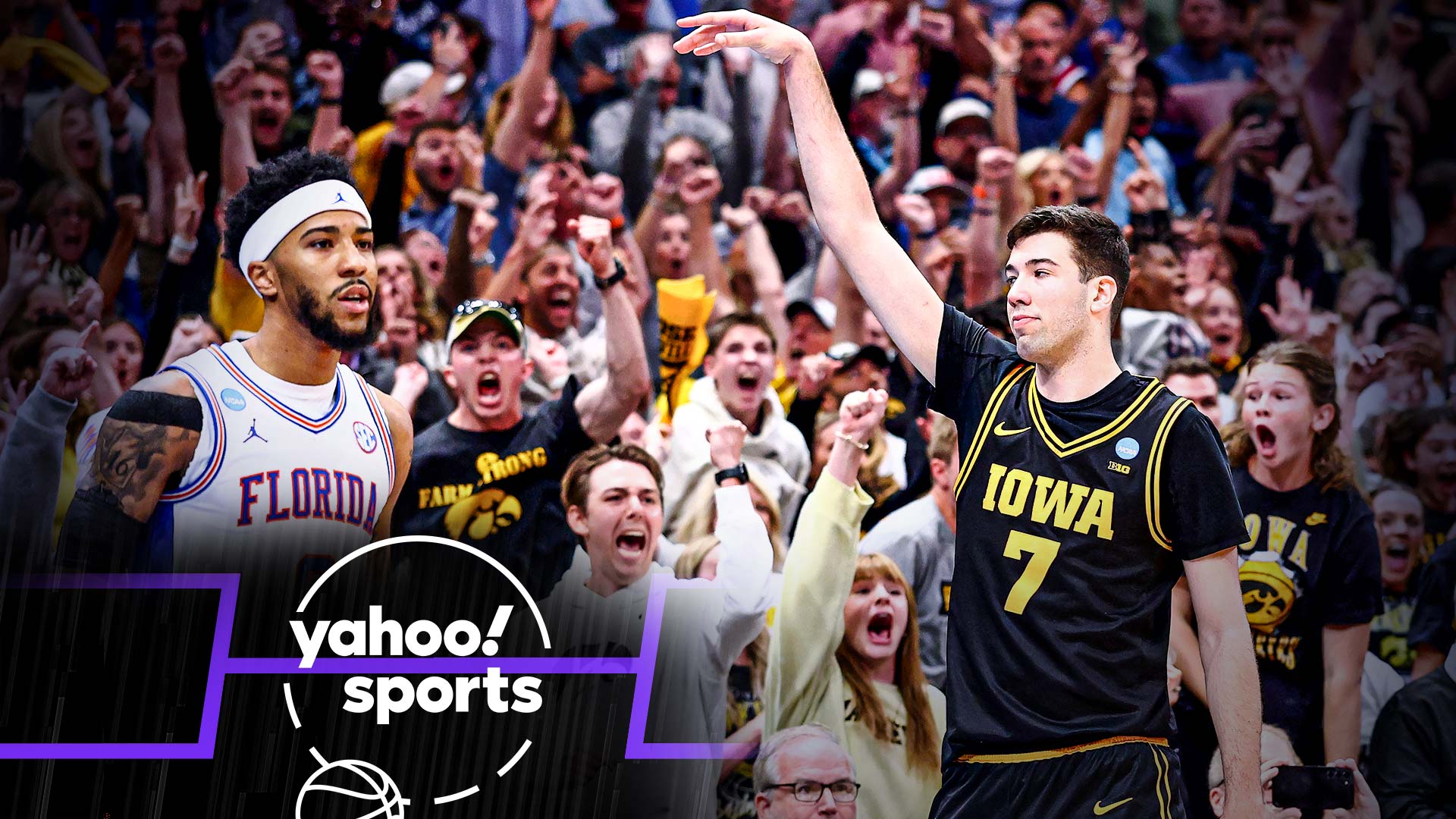
Yahoo Sports

All 16 teams that advanced to the second week of this year'sNCAA tournamenthail from one of the five power conferences.

The only double-digit-seeded upstart that managed to crash the party is aSean Miller-coached Texas team with a $22.4 million operating budgetand an enviable NIL war chest. The closest thing to a charming underdog story left in this year's field is aBig Ten runner-up Nebraska teammaking its firstSweet 16appearance after decades of basketball irrelevance.

At least one team from outside the power conferences reached the round of 16 for 49 straight years after the NCAA tournament expanded to 32 teams in 1975. That streak ended last March when none of those schools advanced beyond the NCAA tournament's opening weekend. Now the mid-majors have been eliminated early for a second consecutive year.

Why is March Madness becoming less mad? Why are the NCAA tournament's giants swatting aside the giant slayers more consistently than they did just a few years ago? Jeff Eisenberg and Dan Wolken of Yahoo Sports examined what's behind this trend and offer differing theories below.

Jump to:Jeff Eisenberg on NIL's impact|Dan Wolken on the hidden villain(s)
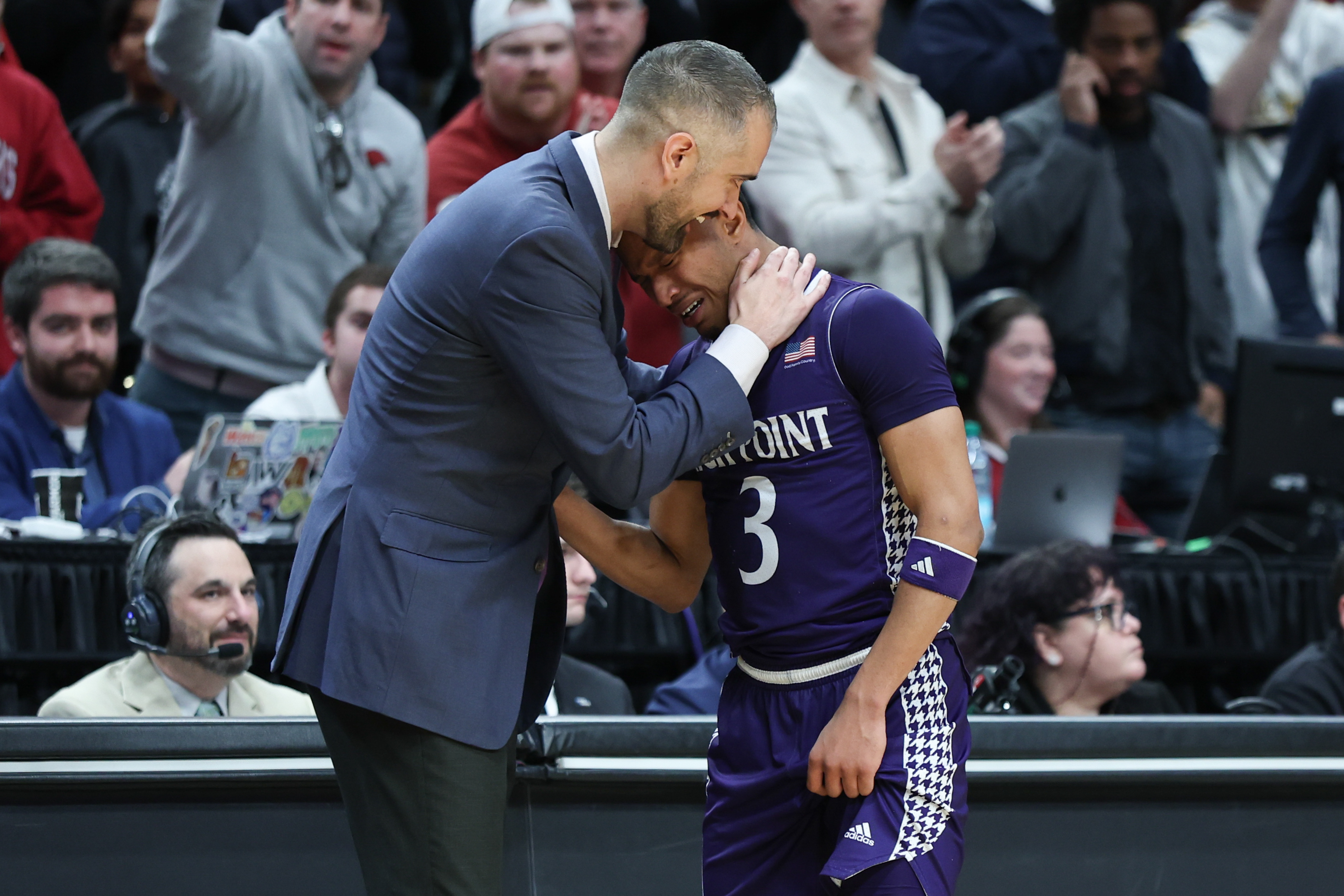
High Point head coach Flynn Clayman talks with guard Rob Martin (3) during the second half in the second round of the NCAA college basketball tournament against Arkansas, Saturday, March 21, 2026, in Portland, Ore. (AP Photo/Craig Mitchelldyer)

Cinderellas worried about tourney future can blame NIL

By Jeff Eisenberg

When his team opened conference tournament play earlier this month, Queens University men's basketball coach Grant Leonard glanced into the stands and was surprised by what he saw.

Sitting courtside, Leonard said, was an SEC assistant coach who was there to get a head start scouting and recruiting a Queens player who had not yet entered the transfer portal. The SEC assistant wore school-branded apparel just like coaches do when trying to make their presence known to high school prospects while attending Peach Jam or other AAU tournaments.

"I don't think it is the right thing ethically to go to our conference tournament, sit on the floor and try to interact with my player in an elimination game," Leonard told reporters Thursday on the eve of Queens' first-round NCAA tournament game against Purdue. "That is my opinion; it is not a fact. Is it permissible? Maybe, maybe not. Is it ethical? In my opinion no."

Stories like that help illustratewhy the Cinderella runs that have long been the lifeblood of the NCAA tournament are rapidly becoming more scarce. The gap between college basketball's haves and have-nots is rapidly widening because top-tier programs can offer massive NIL payouts to the best available talent and because transfer rules no longer prevent players from switching schools as often as they want without penalty.

The name-brand programs who have advanced in this year's NCAA tournament have treated mid-major teams like their personal farm system. Their rosters are littered with players who began their college careers at a lower level, from Michigan's Yaxel Lendeborg, to Louisville's Ryan Conwell, to UCLA's Donovan Dent, to Tennessee's Ja'Kobi Gillepsie.

Join or create a Yahoo Fantasy Baseball league for the 2026 MLB season

Mid-majors struggling to keep best players

Those player retention issues have eaten away at the biggest advantage that small-conference programs used to have in March. The Loyola Chicagos, Wichita States and Butlers of the past overcame the talent gap with older players who developed superior cohesiveness through years of playing together. That's harder to pull off today with wealthier programs sliding into players' DMs or making life-altering offers through back channels.

The ability to offer NIL payouts well into seven figures has also allowed high-majors to recruit guys who in the past would be playing professional basketball. Teams at the top of this year's NCAA tournament bracket are loaded with prized freshmen, international prospects and proven veterans who can earn more playing college basketball than they can in overseas pro leagues, the G League or even on an NBA two-way contract. There are teams who are paying six figures to players coming off their bench.

The concentration of talent at the top of college basketball is exemplified by how the past two NCAA tournaments have unfolded. Not a single team seeded 13th or worse has advanced out of the round of 64. Every team that has made the past two Sweet 16s has come from a power conference.

Thirteen of 32 first-round games in this year's tournament were decided by more than 20 points. The average margin of victory in the first round was 17.4,the highest since the tournament expanded in 1985, per ESPN research.

Impact of regular season

Two NCAA tournaments may be a small sample size, but regular-season results also reflect the growing chasm between top-tier teams and everyone else. There were 378 matchups this November between high-majors and non-Gonzaga teams from other conferences. The little guy won only 22 of them, according to research by Yahoo Sports.

"In the past, if you did a good job evaluating and a good job recruiting and you found guys who were a notch above your level, they wouldn't leave because they'd have to sit out some place," former Fairleigh Dickinson and Iona coach Tobin Anderson told Yahoo Sports in November. "Now with the portal and nonstop free agency, a good low-major or mid-major team for the most part is going to lose its best players every year."

By the numbers, Duke, Arizona and Michigan entered this year's NCAA tournament as three of the strongest No. 1 seeds in recent memory. Each boasted KenPom adjusted efficiency margins of at least 37.59, meaning that's how many points that college basketball statistician Ken Pomeroy would project them to outscore the average Division I opponent by over 100 possessions.

Since the KenPom era began in 1997, only 10 teams have ever finished a season with adjusted efficiency margins higher than 35. Four of those are last year's No. 1 seeds.

It isn't just the No. 1 seeds who were unusually formidable this season. A total of 20 teams seeded sixth or higher entered the NCAA tournament with adjusted efficiency margins of plus-25, compared to just four at the end of the 2022-23 college basketball season and nine the year before that.

It's the opposite story for schools from single-bid leagues, the sorts of programs who populated the seed lines at the bottom of this year's bracket.

That's why this has been another NCAA tournament where the giants have swatted aside the giant slayers, where the teams that advance have deep pockets, not glass slippers.

Advertisement

Jump to:Jeff Eisenberg on NIL's impact|Dan Wolken on the hidden villain(s)
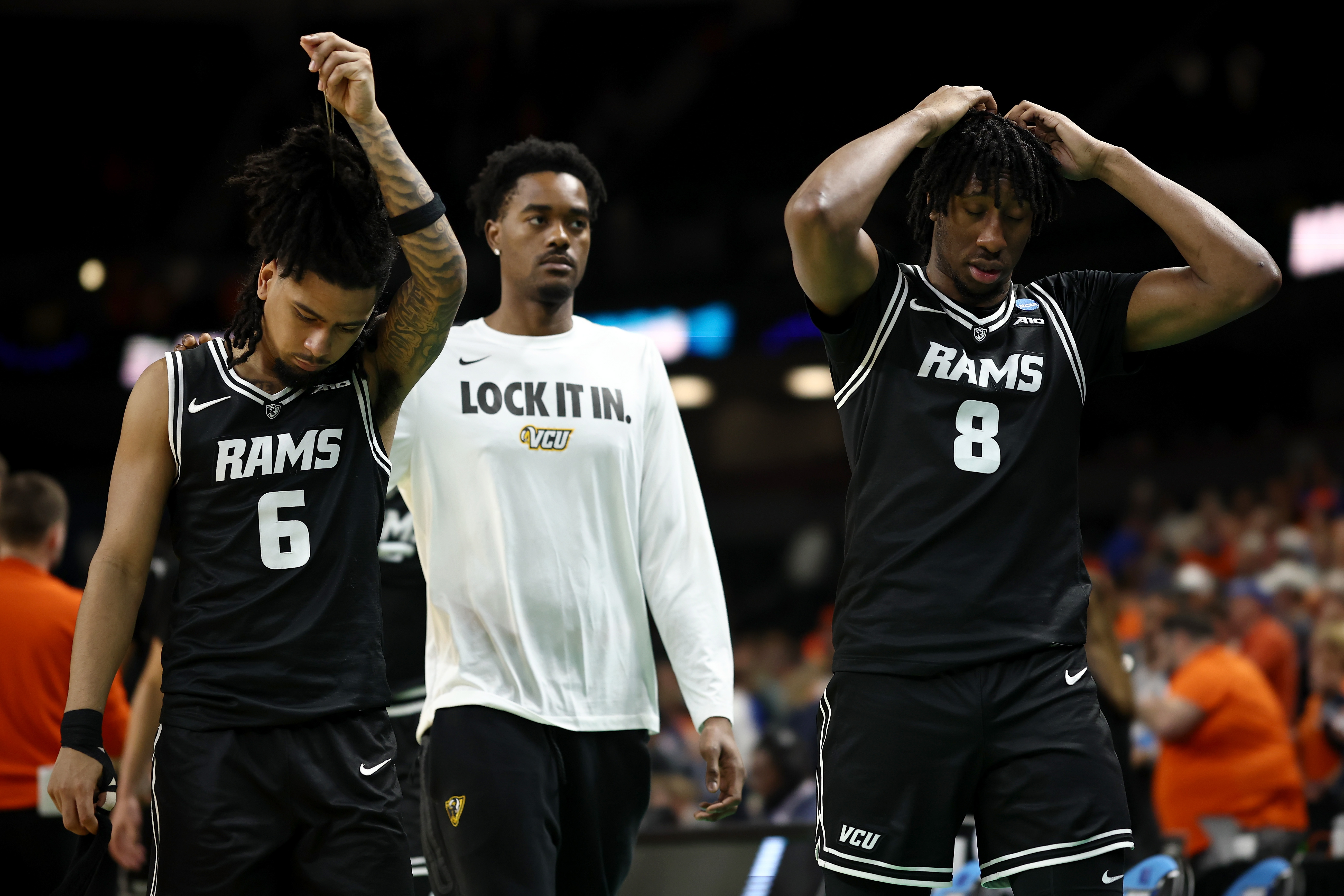
GREENVILLE, SOUTH CAROLINA - MARCH 21: Terrence Hill Jr. #6 and Michael Belle #8 of the VCU Rams walk off the court after the game against the Illinois Fighting Illini in the second round of the 2026 NCAA Men's Basketball Tournament at Bon Secours Wellness Arena on March 21, 2026 in Greenville, South Carolina. The Fighting Illini defeated the Rams 76-55. (Photo by Jared C. Tilton/Getty Images)

Meet the real villain(s) behind death of Cinderella

By Dan Wolken

As we endure a second straight year without much mid-major magic in the NCAA tournament's opening weekend, plenty of fingers will be pointed at the current NIL and transfer environmentfor killing Cinderella.

That may or may not be true. Two years is still a small sample size, and if a couple close games go the other way — Santa Clara, Siena and Wright State all had great chances in the final few minutes to take down blue-blood programs — we're having a totally different discussion.

But, in the aggregate, I'll acknowledge it certainlyfeltlike the first round of the NCAA tournament was top heavy. A lot of blowouts — the first-round average margin of victory was 17.4 points, the highest since the tournament expanded in 1985. A lot of 12, 13, 14 and 15 seeds that looked significantly outclassed.

The transfer portal is an easybête noirein this discussion. All the power conference schools are scouting mid-major rosters, and anyone who shows promise at a lower level is being offered big money to transfer. Again, I'll acknowledge this isn't great for mid-major programs. From a 30,000-foot view, it is harder to maintain talent and continuity across the bottom 270 or so programs in the sport.

In terms of how it's specifically affecting the NCAA tournament, however, there's another factor that deserves more of the blame than it's getting.

Conference realignment.

If Cinderella is indeed on life support, it's far more likely that the mad rush since 2010 to draw up coast-to-coast, mammoth football conferences was what put her in the ICU in the first place.

Mid-majors had proud history in NCAA tournament

Go back 15 years and look at some of these conferences that produced the iconic mid-major teams of recent vintage like Butler, VCU, Wichita State and Loyola Chicago. They are almost unrecognizable today, and you can trace the reason directly to the ACC, Big Ten, Big 12 and SEC gluttonizing themselves into amorphous blobs and creating a domino effect that significantly weakened dozens of conferences below them.

And yet all those conferences continue to get automatic bids, and the quality of teams filling those slots has undeniably gotten weaker.

Let's look at 2016 — just 10 years ago. The average pre-tournament KenPom ranking of the No. 15 seeds was 124, the average No. 14 seeds was 105, the average of No. 13 seeds was 84 and the average No. 12 seeds was 73.

Four years ago, in 2022, we had one of the craziest tournaments ever. Here were the KenPom averages: No. 15 seeds were 140, No. 14 seeds were 134, No. 13 seeds were 83, No. 12 seeds were 61. (In that tournament, a 15 seed won a first-round game, two 12 seeds won first-round games and the 4-13 games were decided by a total of 18 points.)

This year? It's a totally different story. The 15 seed average is around 179, the 14 seed average is roughly 142, the 13 seed average is 113, the 12 seed average is 76.

As you can see, it's very clear in the numbers that the quality of automatic bid winners filling these Cinderella seed lines has declined over time. The same conferences that put good teams in the tournament are now producing weaker champions. And that's happened at the same time fringe NBA prospects are staying in college longer because of NIL, making the top layer of the sport stronger.

But when you're talking about the NCAA tournament, where a limited number of teams from that top layer are playing the cream of the crop from smaller conferences, it's crucial to understand that many of those conferences are now a shell of what they once were due to realignment.

Realignment erodes lower-level conferences

When the Big East reformed as a basketball-only league in 2013 because it got tired of being jerked around by football realignment, it weakened the A-10 by taking Xavier and Butler, and the Missouri Valley by inviting Creighton. The A-10 responded by taking VCU and George Mason from the CAA, Davidson from the Southern Conference, then Loyola from the Missouri Valley several years later.

The Valley, having lost Creighton, Loyola and Wichita State (which bolted to the American), backfilled with Belmont and Murray State, which took the two best programs from the Ohio Valley Conference, which in turn added Little Rock and Western Illinois.

Meanwhile, the American losing SMU, Houston, UCF and Cincinnati to power conferences sparked a raid of Conference USA, which caused that league to take a grab bag of schools from the CAA, Atlantic Sun and Missouri Valley.

This has happened over and over across all these realignment moves. As one league scrambles for survival by taking the best members of a league just below them in the pecking order, it erodes the strength of each conference down the chain.

For a long time, leagues like the MVC, CAA and Horizon could reliably put competitive 12 or 13 seeds in the tournament because they had a core of solid programs and good brands. Now, the membership of those leagues is totally different, but they're still getting the same automatic bids.

You don't even need to mention NIL or the transfer portal to see very easily how the quality of teams filling those bids could slip, which is now showing up clearly in the numbers. And if you get a year like this one where several of the No. 1 seeds in the mid- and low-major leagues lost their conference tournaments, it takes the quality of the No. 12-15 seeds down another notch and you end up with the kind of blowouts we saw on Thursday and Friday.

The NCAA tournament is not a microcosm of the sport. College basketball has never been as equal as the March Madness branding makes it look. With 350-plus teams, the gap between the haves and have-nots has always been massive.

But in a one-off event like this, how you sort the teams in the field matters significantly. If the 100th-best team in the country was a typical 14 seed a decade ago and now the typical 14 seed is the 142nd-best team, that's a huge difference driving a decline in upsets.

Is that an issue the NCAA needs to address? Perhaps. But if we're going to worry about the death of Cinderella, we need to correctly identify what killed her. NIL and the transfer portal are only part of the story — and maybe even the smallest part compared to 15 years of realignment shock coming home to roost.

NCAA tournament: If Cinderella is dead, who (or what) is to blame? Here are the biggest culprits

Midnight came early again for Cinderella. All 16 teams that advanced to the second week of this year'sNCAA...
Toni Braxton Unable to Finish Show in Minneapolis Due to 'Unexpected Personal Emergency'

Toni Braxton apologized to fans after cutting her Minneapolis show short due to a personal emergency

People Toni BraxtonCredit: Weiss Eubanks/NBCUniversal via Getty

NEED TO KNOW

  • "You deserved my everything and I hate that I couldn't give it to you," she wrote on her Instagram Stories

  • The Grammy winner has previously spoken about managing health challenges, including lupus and a 2022 emergency heart surgery

Toni Braxton's set was cut short in Minneapolis.

The "He Wasn't Man Enough" singer, 58, is in the midst of performing shows withNew EditionandBoyz II Menon the New Edition Way Tour, which made a stop at the Target Center in Minneapolis on Sunday, March 22 — but Braxton didn't finish her portion of the show.

The Grammy winner took to her Instagram Stories on Monday, March 23 to address the mishap. "My loves, I am so sorry I wasn't able to finish the show last night. I had an unexpected personal emergency and had no choice but to step away," she wrote.

"You deserved my everything and I hate that I couldn't give it to you," continued Braxton. "I feel your love from here. Thank you for understanding."

PEOPLE reached out to reps for the New Edition Way Tour for comment.

Toni Braxton in January 2026Credit: Ethan Miller/Getty

The tour features Braxton and Boyz II Men performing mini-sets throughout the show, with the "Un-Break My Heart" artist generally delivering nine songs. It's unclear what was ultimately cut from the Minneapolis show.

Advertisement

While Braxton didn't share the reason behind not completing her performance, she's opened up in the past about the difficulty of touring with systemiclupuserythematosus (SLE). The "Spanish Guitar" musician also underwentemergency heart surgery in 2022.

Ahead of embarking on the Love & Laughter residency withCedric the Entertainerin Las Vegas in 2024,Braxton opened up to PEOPLE about feeling "anxiety"due to her medical condition.

"I've been feeling okay, that's been the anxiety, just making sure I'm ready," she said at the time. "My doctor said I'm ready to go. I got checked off, everything's good, but there is a little anxiety performing and having that health scare. But the man upstairs said it's going to be okay, so I know I'm going to be alright."

Braxton also spoke about taking precautions to manage her health. "You know what? I don't always eat good 'cause I'm a burger girl, so I'm not going to sit here and lie and say, 'Oh, I eat real good.' I try to eat as healthy as I can, especially when I'm working, I try to be disciplined, but I have to have those burgers and things like that," she said.

The mother of two,who's married to rapper Birdman, added, "I just try to pace it. Pacing is very important, and if I feel like I'm overdoing it, I know to take a break. Sometimes it's hard to do that. You don't recognize when you're being stressed a little bit or overdoing it, so I just know to pace it and then everything's fine."

Read the original article onPeople

Toni Braxton Unable to Finish Show in Minneapolis Due to 'Unexpected Personal Emergency'

Toni Braxton apologized to fans after cutting her Minneapolis show short due to a personal emergency NEED TO KN...


COSMO NEWS © 2015 | Distributed By My Blogger Themes | Designed By Templateism.com