
More than 13,000 pounds of frozen chicken breast have been recalled due to a potentiallisteriacontamination.
Suzanna's Kitchen, based in Georgia, recalled about13,720 pounds of ready-to-eat grilled chicken breast filletsbecause they may pose a risk oflisteria monocytogenes, the U.S. Department of Agriculture's (USDA) Food and Safety Inspection Service (FSIS) announced on Jan. 16.
The potential contamination was discovered when a third-party lab sample reported positive for listeria in the chicken breast fillets. As of Jan. 16, there were no confirmed reports of illness due to consumption of the chicken breasts, according to the FSIS.
Here's what to know about the chicken breast recall.
 Consumer Reports, the nonprofit known for testing and monitoring consumer-facing policy and products, released its annual risky food report in April, naming the 10 foods of 2024 that were subject to the most recalls and/or associated with the largest illness outbreaks. USA TODAY broke it down further on a what-you-need-to-know basis. " style="max-width:100%; height:auto; border-radius:6px; margin:10px 0;" loading="lazy" />
  Deli meat is somewhat of a "risky" food as it is often associated with the spread of listeria, such as in the 2024 case of the Boar's Head listeria outbreak that killed 10. Listeria monocytogenes is a hardy germ that can survive in very low temperatures but thrives in cool and damp places. It can, and will, happily live on foods in your or your grocery store's storage area, and the process for mass-producing the meat lends itself to plenty of opportunities for contamination." style="max-width:100%; height:auto; border-radius:6px; margin:10px 0;" loading="lazy" />
  Produce, like the cucumbers recalled due to a salmonella outbreak that infected 113 people across 23 states, can become adulterated with harmful bacteria through fecal contamination, which can occur through wastewater, water in the growing area, fertilizer and the proximity of the growing area to livestock." style="max-width:100%; height:auto; border-radius:6px; margin:10px 0;" loading="lazy" />
  Raw dairy, which is always unsafe to consume and illegal to sell in some states, poses a risk when it's not pasteurized. Dairy pasteurization, or heating milk products to a high enough temperature to kill harmful bacteria, has been practiced since the 1920s and has resulted in illnesses commonly spread via milk, such as listeriosis, diphtheria and tuberculosis, becoming less prevalent." style="max-width:100%; height:auto; border-radius:6px; margin:10px 0;" loading="lazy" />
  Cotija and queso fresco cheese are made from unpasteurized milk, meaning they carry an increased risk. One producer, Rizo-Lopez Foods, was shut down in October 2024 after its cheeses were linked to a years-long listeria outbreak that killed two people and made dozens of others sick." style="max-width:100%; height:auto; border-radius:6px; margin:10px 0;" loading="lazy" />
  Eggs can become contaminated via the same means as cucumbers and other raw produce, especially if they have a cracked shell. " style="max-width:100%; height:auto; border-radius:6px; margin:10px 0;" loading="lazy" />
  Like other raw produce, onions can become infected via fecal contamination. In 2024, E. coli-contaminated slivered onions on McDonald's Quarter Pounders triggered some locations to stop serving the burger temporarily. " style="max-width:100%; height:auto; border-radius:6px; margin:10px 0;" loading="lazy" />
  Like cucumbers and onions, leafy greens are easily contaminated with bacteria like E. coli, as in the case of the Solata Foods spinach recall in 2024. " style="max-width:100%; height:auto; border-radius:6px; margin:10px 0;" loading="lazy" />
  Organic carrots were linked to a major E. coli outbreak in late 2024, leaving at least 39 ill and one dead. " style="max-width:100%; height:auto; border-radius:6px; margin:10px 0;" loading="lazy" />
  Ready-to-eat/cooked poultry and meat have been the source of multiple major recalls and foodborne illness outbreaks in recent years. The same issue arises with RTE foods as with deli meat; the conditions they are made and stored under are often ideal for bacteria such as listeria to grow. In 2024, millions of pounds of RTE foods were recalled by BrucePac for listeria contamination. " style="max-width:100%; height:auto; border-radius:6px; margin:10px 0;" loading="lazy" />
 See the 'risky foods' linked to US recalls and illness outbreaks
Consumer Reports, the nonprofit known for testing and monitoring consumer-facing policy and products, releasedits annual risky food reportin April, naming the 10 foods of 2024 that were subject to the most recalls and/or associated with the largest illness outbreaks. USA TODAYbroke it down furtheron a what-you-need-to-know basis.
What is listeria?Plus, how to reduce your risk before next outbreak
Recall:Cheese recall classified as potentially deadly. See affected products.
What frozen chicken breasts are recalled?
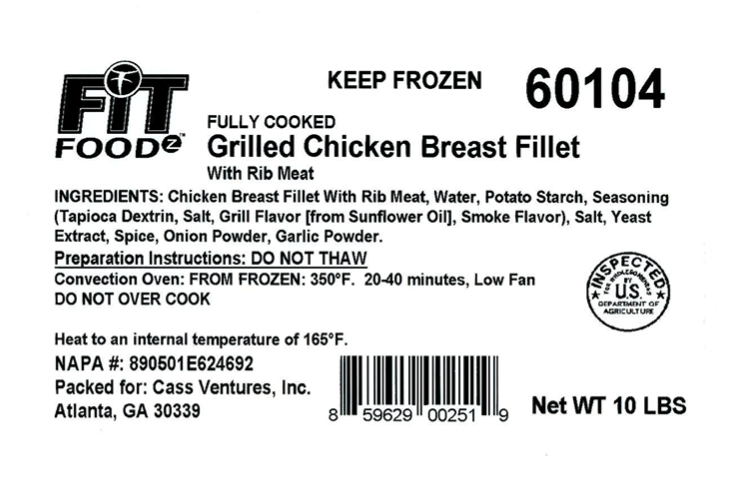
The recalled grilled chicken breast fillets were sold in 10-pound cases containing 5-pound bags. The lot code is 60104 P1382 287 5 J14, which is located on the side of the case and on the two bags.
The recalled chicken breasts were produced on Oct. 14, 2025, according to the FSIS.
Take a look at the label of the recalled chicken breasts below:
Advertisement
Where were the recalled frozen chicken breasts sold?
The recalled frozen chicken breast fillets were distributed in Alabama, Florida, Georgia, Missouri, New Hampshire, North Carolina and Ohio, according to the FSIS.
What to do if you own recalled frozen chicken breasts
Consumers who own the recalled chicken breasts should throw them away or return them to the place of purchase immediately.
Consumers with questions should contact Suzanna's Kitchen Customer Service Director Dawn Duncan at dduncan@suzannaskitchen.com. The USDA Meat and Poultry Hotline is also available at 888-674-6854 or questions can be submitted to the email mphotline@usda.gov.
What is listeria monocytogenes?
Listeria monocytogenes, more commonly known as listeria, is a disease-causing bacteria that can be found in soil, water, sewage, rotting vegetation and animals, according to the USDA. It can survive and grow in refrigeration and can thrive in unsanitary food production conditions.
What are listeria symptoms?
Listeria infects about 1,600 people each year, according to theCenters for Disease Prevention and Control.
Listeria symptoms vary per person but there are two forms of the disease:
A less severe, non-invasive gastrointestinal listeriosis may appear as mid symptoms, like fever, muscle aches, nausea, vomiting and diarrhea. These symptoms may continue for one to three days, according to theUSDA.
A more severe, life-threatening invasive form of the disease may appear as a headache, stiff neck, confusion, loss of balance and convulsions, the USDA reports. This more invasive form can be life-threatening to newborns, pregnant people, adults over 65 and folks with weakened immune systems.
Greta Cross is a national trending reporter at USA TODAY. Story idea? Email her atgcross@usatoday.com.
This article originally appeared on USA TODAY:Frozen chicken breasts recalled due to listeria risk. See products.
