WASHINGTON (AP) — Barely a month into his presidency,Joe Bidenhad a message for Europe.
"America is back," Biden told the Munich Security Conference in 2021. "The transatlantic alliance is back."
It was a promise Biden delivered often as he sought to cast the disruptions of his predecessor,Donald Trump, as an anomaly. But nearly five years later, Biden's assurances have proven short-lived.
In his second term, Trump has cast aside alliances forged over seven decades with Europe that helped lead to the reunification of Germany and the collapse of the Soviet Union. He has hectored leaders, making demands and leveling accusations more commonly associated with enemies. In the process, he has rocked the stability that has sustained the relationships and left countries to chart a course without U.S. leadership.
The most stark example of this shift has been Trump's threat to take overGreenland, dismissing the nation as a large "piece of ice" as he demanded that Denmark cede control to the U.S., a move that could have caused NATO to rupture.
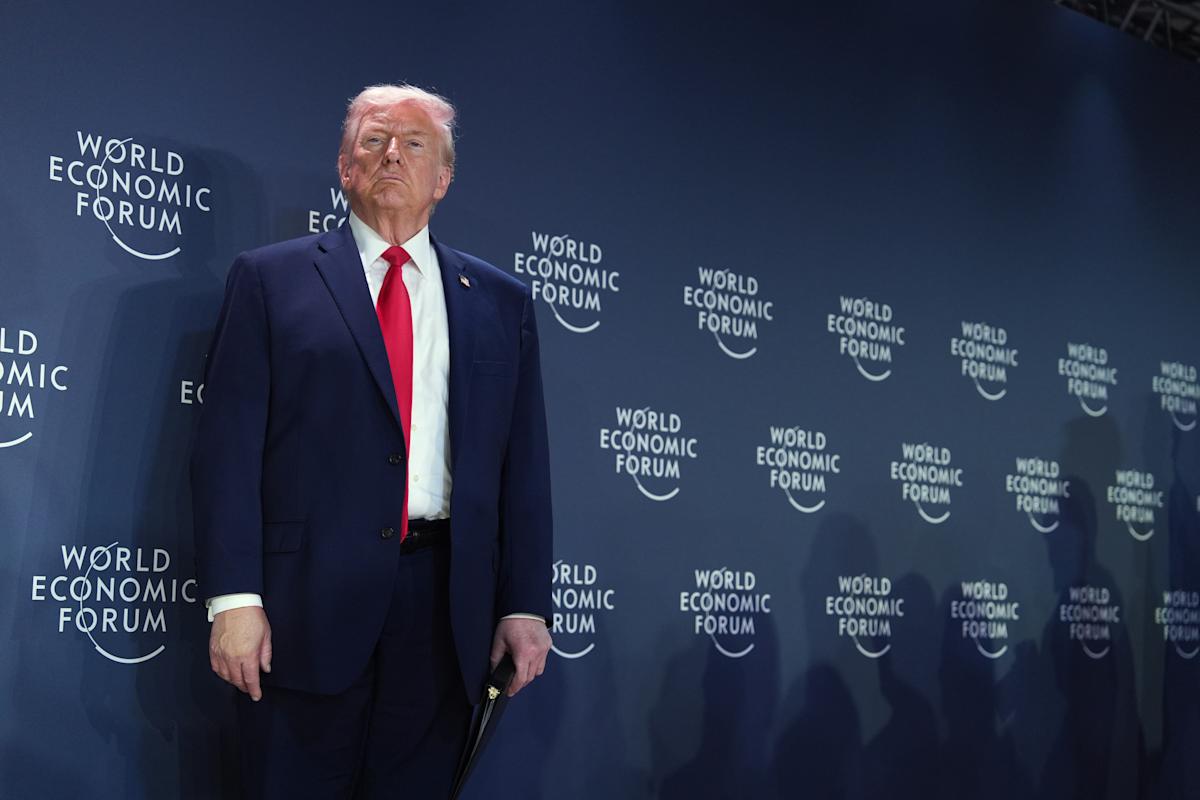
He called Denmark, which had thehighest per capita death tollamong coalition forces in Afghanistan, "ungrateful" for U.S. protection during World War II. Heposted private text messagesthat showed European leaders trying to court him. Trump shared images of him planting the U.S. flag in Greenland and, in an extraordinary speech at the World Economic Forum in Davos, said Europe was "not heading in the right direction." At one point, he said that "sometimes you need a dictator."
Then, hours later, heannounceda "framework of a future deal" on Arctic security. Following a long pattern, however, he offered scant details.
An uncertain standing for the US in the world
Though Trump has for now backed away from his most potent threats to obtain Greenland, the episode has left America's standing in the world uncertain.
NATO leaders already were responding to Trump's threats by signaling strategies that don't include the U.S. That could make it much harder for the next president — whether they are a Democrat or Republican — to attempt the same type of reputational repair that Biden sought.
"To an extent, things can be improved," said Jon Finer, who was Biden's deputy national security adviser and is now a distinguished senior fellow at the Center for American Progress. "But they will never be the same in large part because I think any country that is behaving rationally in terms of its relationship with the United States will realize that we can only be counted on in four year increments, if at all."
Canadian Prime Minister Mark Carney, who parried Trump's gambit to make Canada the 51st state, has already set out on a more independent path. In Davos, Carney was candid that the notion of the longstanding rules-based order was an "illusion."
"Let me be direct: We are in the midst of a rupture, not a transition," Carney said as he called on so-called middle powers to "act together."
Unable to reach a deal with Trump to cut tariffs, Carney was in Beijing last week meeting with President Xi Jinping andbrokering a dealthat cut levies on Chinese electric cars in return for lower tariffs on certain agricultural and food products including Canadian canola, lobsters and crab. While there,he said ties between Ottawa and Washingtonwere "much more multifaceted" than with Beijing, but added "the way our relationship has progressed in recent months with China, it is more predictable."
Over the weekend, the European Union and the Mercosur bloc of South American countriesformally signeda long-soughtfree trade agreement, which European Commission PresidentUrsula von der Leyenportrayed as a bulwark against the Trump administration. EU lawmakersnarrowly votedon Wednesday to hold up the deal for now.
European leaders were unsparing
Ahead of Trump's appearance in Davos, European leaders were unsparing, using language that until recently would have been unthinkable in relation to a dispute with the U.S. French PresidentEmmanuel Macroncautioned against colonial adventures, warning of "a shift towards a world without rules."
Belgian Prime Minister Bart De Wever said "so many red lines have been crossed," adding, "being a happy vassal is one thing. Being a miserable slave is something else. If you back down now, you're going to lose your dignity."
This moment was also notable for the criticism of Trump from longtime allies on the right. In the UK,Nigel Faragesaid in an interview with U.S. House SpeakerMike Johnsonthat he understood the security issues Trump was raising in the Arctic. But he added that Trump's approach amounted to the "biggest fracture" in the transatlantic relationship in decades.
"To have a U.S. president threatening tariffs unless we agree that he can take over Greenland, by some means, without it seems even getting the consent of the people of Greenland, I mean, this is a very hostile act," Farage told Johnson.
Jordan Bardella, president of Marine Le Pen's far-right National Rally party in France and a European Parliament lawmaker, posted that the EU should suspend last year's tariff deal with the U.S., describing Trump's threats as "commercial blackmail."
Trump mostly has support from GOP in Congress
Congressional Republicans so far have largely supported Trump — or stayed silent.
House Foreign Affairs Committee Chairman Brian Mast likened the dispute to "a hard conversation" and questioned the long-term consequences. Trump used his 2025 State of the Union address to express a desire toreclaim the Panama Canal.
"If you went back exactly one year, you might say, 'man the tensions with Panama were the worst they'd ever been,'" said Mast, a Florida Republican. "Panama came in last week, things were the best that they'd ever been because we had some really tough conversations with each other that we needed to have."
The most pointed concerns from inside the GOP have largely come from those who aren't running for reelection this year, including Rep. Don Bacon of Nebraska, who said on Wednesday that "all of this has been totally unnecessary."
"Threatening Greenland with force was absurd," he said.
For their part, Democrats have encouraged a more robust response — both from Europe and in the U.S.
California Gov.Gavin Newsom, a potential Democratic presidential candidate in 2028, was in Davos this week and blasted Europeans for focusing on diplomatic efforts ahead of Trump's appearance.
"Diplomacy with Donald Trump?" he said. "He's a T-Rex. You mate with him or he devours you."
In an interview, Rep. Gregory Meeks, the top Democrat on the House Foreign Affairs Committee, said it "may take some time" for a future president to rebuild trust with allies. But he argued a full recovery in global relationships may require a more lasting shift in U.S. politics.
Allies will "continue to hold their breath until you have two consecutive elections when we know we have a president that is going to stick by our institutions," he said. "Everybody's just looking at us now as a nation and trying to see where we will be."
Associated Press writers Rob Gillies in Toronto, Sam McNeil in Brussels and John Leicester in Paris contributed to this report.
