
During thenational championship gamelast week, one team played the first half without a key defensive player.
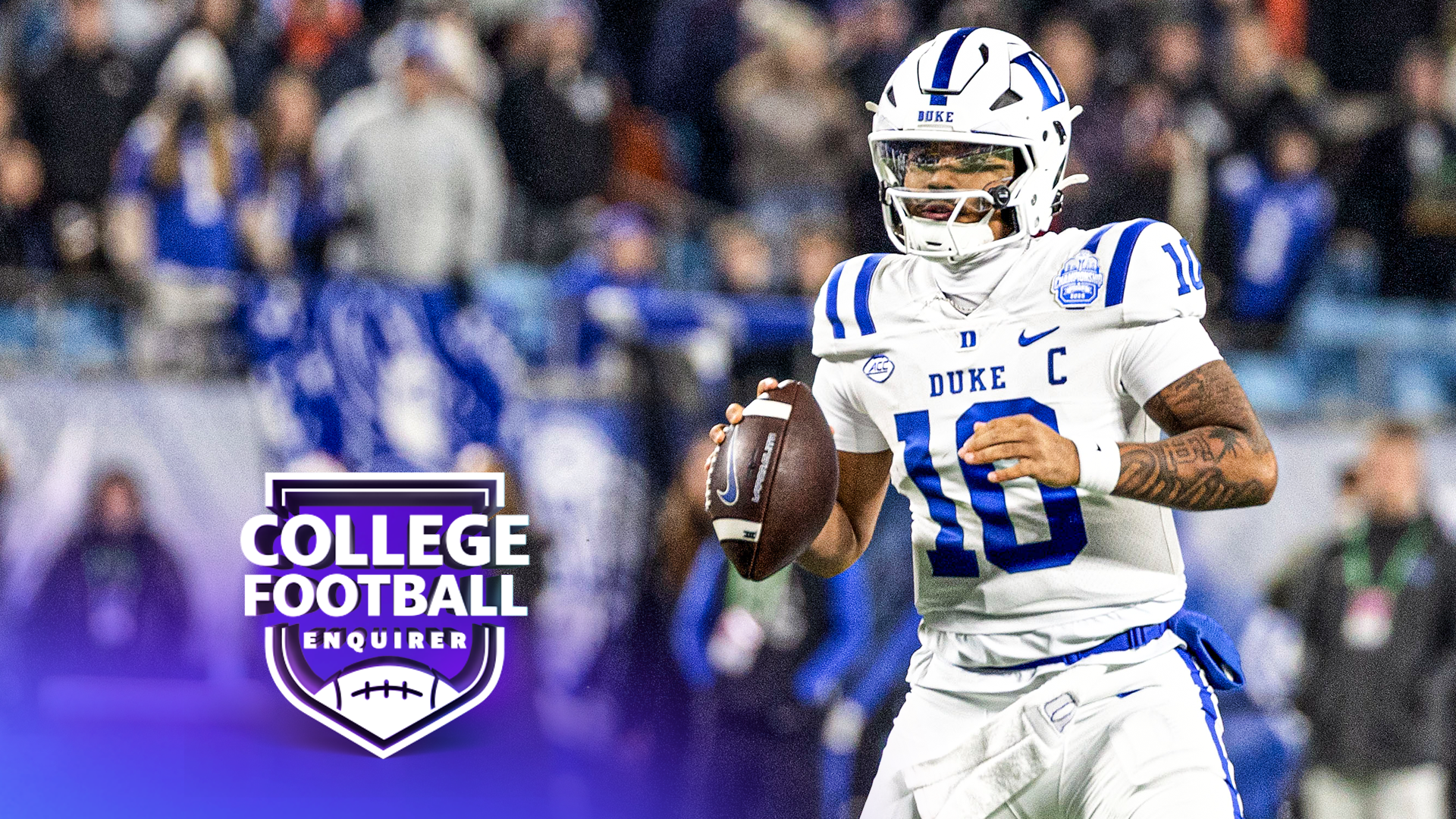
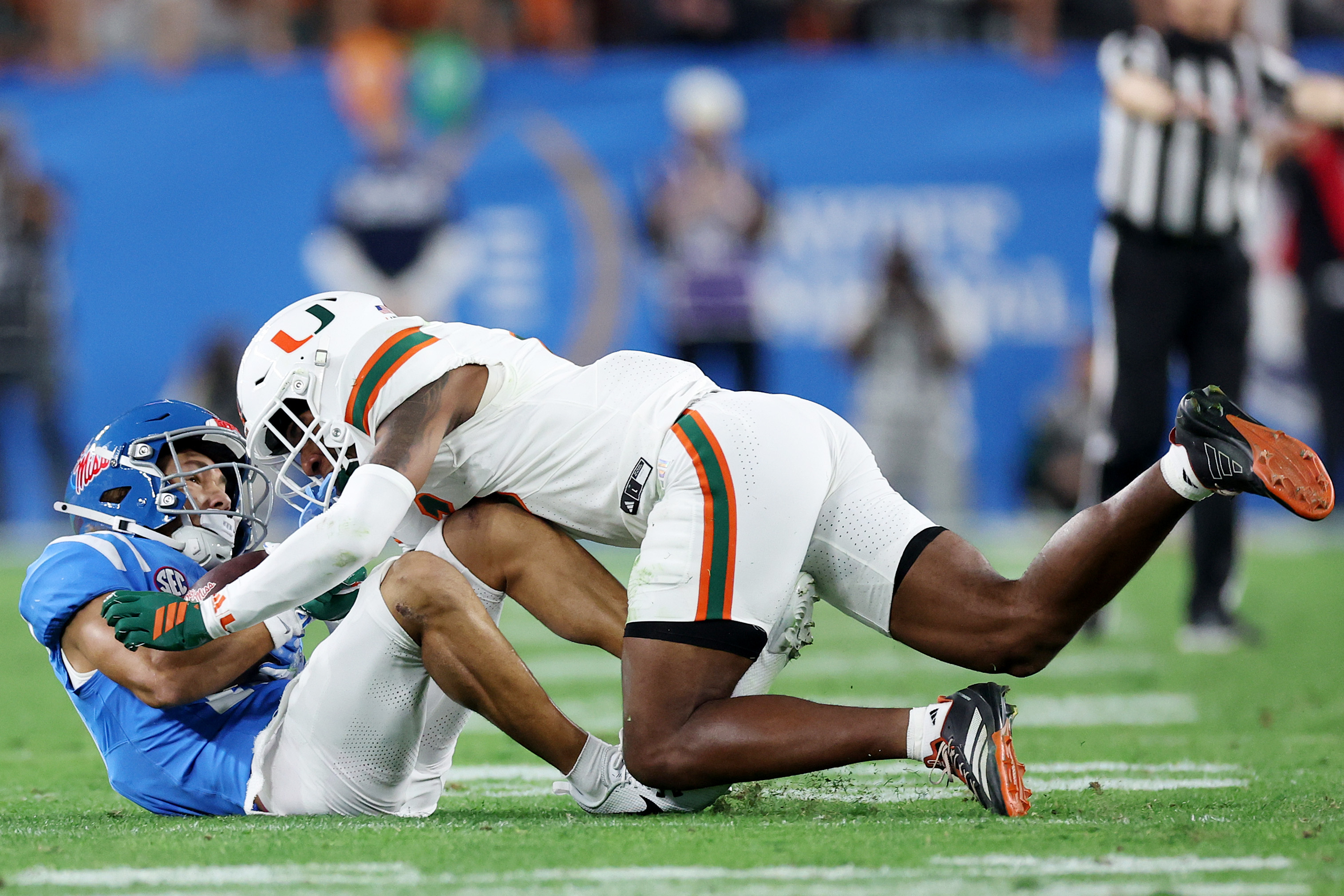
Miami cornerback Xavier Lucas spent the first two quarters sidelined as part of a targeting foul he committed in the second half of the previous game — a semifinal win over Ole Miss. The foul cost Miami 15 penalty yards, disqualified Lucas from the final three defensive drives of the semifinal and, in a carryover disqualification, kept him from playing in the first half of the biggest game of his career — the national championship bout against Indiana.
Miami head coach Mario Cristobal described the foul and punishment as "unjust."
Well, this offseason, officials plan to review potential changes to the most scrutinized penalty in all of college football.
"We're going to be having a discussion on targeting," Steve Shaw, the national coordinator of officials and the NCAA's secretary-rules editor, told Yahoo Sports last week from Miami, site of the national title game. "That needs to be an annual discussion. It will be a focus discussion."
Is targeting on the proverbial chopping block? No, not even close. There will be no "backing up" on the targeting rule, Shaw says, as it has been successful in its goal of making the game safer by changing player behavior related to head collisions.
However, aspects of the targeting penalty structure are under the proverbial microscope, such as the disqualification punishment.
"What targeting has driven in terms of player behavior change has been really good and the numbers reflect that," said Shaw. "But how can we continue this trend of taking out more of these hits we don't want in the game while being less punitive?"
Targeting has, indeed, changed player behavior. In fact, since 2020 — what Shaw calls the height of targeting fouls — there has been an annual decrease in the number of targeting penalties. In 2020, officials flagged a player for targeting once in every four games. This year, that number is more like once in every seven to eight games.
Targeting, however, remains the most divisive, confusing and frustrating penalty among, not just college football fans, but coaches and administrators too.
The NCAA defines targeting as when a player initiates forcible contact against an opposing player to the head or neck area, most often — but not always — when leading with the crown (top) of the helmet against a defenseless player. If a player makes forcible contact with the head of a defenseless player, targeting may also be called.
Targeting carries with it a 15-yard penalty, plus the player who committed the act is disqualified for the remainder of the current game. If the penalty occurs in the second half of a game, that player is also disqualified for the first half of the next game.
When exploring the penalty structure this offseason, officials must determine if the disqualification — and the carryover disqualification — is still warranted. Could rules officials create two different levels of targeting fouls, similar to flagrant fouls in basketball?
A more severe targeting penalty — lowering the crown of the helmet into an opposing player's helmet, for instance — could warrant the penalty yardage plus disqualification. But a less severe penalty — such as Lucas' hit against Ole Miss receiver Cayden Lee (shoulder into helmet) — may necessitate only penalty yardage.
Advertisement
"If we go to that, we have to be really good in our definition of what is a flagrant targeting call," Shaw said. "The guiding principle is we cannot back up on targeting. It'll be an interesting discussion in the rules committee and the commissioners will be a part of that discussion too."
Jon Steinbrecher, the MAC commissioner and chair of the College Football Officiating (CFO) Board of Managers, is open to the conversation, he told Yahoo Sports.
"It is a very tough penalty but it is a penalty that has been effective," Steinbrecher said. "Those that want to do something else, I want to hear the conversation around it."
The CFP board, made up of the 10 FBS conference commissioners plus two FCS commissioners, is scheduled to meet this week in person in Dallas around the National Football Foundation's annual gathering of the 23 conference coordinators of football officials.
However, any changes to the targeting policy — or any other rule — will originate from a recommendation from the NCAA Football Rules Committee. The committee meets annually in late February.
Other rule changes considered
The NFL's drastic change to its kickoffs in 2024 caught the ire of the president of the United States a few months ago.
In September, Donald Trump posted a social media message about the new-look kickoff - intended to prevent injuries —describing it as "ridiculous" and called for the organization to return to the old way.
Well, he'll have no issues with the college kickoff.
Few college executives want to move to the NFL's version of the kickoff. In fact, the industry has made enough minor changes that the injury rate on kickoffs is less than a normal scrimmage down, Shaw says.
"There's not a medical player-safety driver to push us to change the kickoff," he said.
College kickoffs are returned at a 30% clip, which Shaw describes as an "acceptable rate." The kickoff remains a viable play, with 34 kickoffs returned for touchdowns this season, according to the NCAA database.
Over the years, industry leaders have made slight changes to the kickoff procedure to make it safer, including instituting the fair-catch option, moving touchbacks to the 25-yard line and eliminating double-team and blindside blocks.
Meanwhile, Shaw and college executives were pleased with the new rule intended to prevent feigning injuries. The NCAA instituted this year a rule charging a team with a timeout if a player dropped with an injury after the ball was spotted for play.
The feigning injury issue curtailed as the season marched on, becoming a "non-story," Shaw said. "We were pleased. The rule did what we wanted it to do."
