
Within the wailing crowds, a man in a yellow sweater clings to the feet of a corpse, gently rocking, crying and moaning inaudibly. Nearby, a woman can be heard screaming, a guttural noise unmistakable for the discovery that a loved one has died.
The video, shot nearIran's capital, Tehran, shows crowds of men in black winter coats pace and search for information, some speaking urgently into their cellphones. Three women in headscarves are engaged in a heated argument that turns physical, one of them is restrained by the other two as their grief turns to anger. A fourth woman sits slumped against a wall, muttering while listlessly banging her head.
NBC News geolocated the video to Kahrizak Forensic Medical Center, where rows of black body bags can be seen laid inside and outside a large warehouse. Many have been partially opened so the corpses can be identified. Bloody limbs and the faces, mainly of men, are visible.
The video does not appear to have circulated before Sunday but NBC News has not been able to pinpoint when exactly it was taken.

Though theIranian regime has cut the country's internet, this vignette showing the aftermath of its deadly crackdown against demonstrators emerged online Sunday.
It was not clear from the footage how these people died. But according to the Human Rights Activists News Agency, or HRANA, a watchdog based in the United States, almost 600 people have been killed in the demonstrations that broke out just over two weeks ago in response to soaring prices for everyday goods. Of these, 496 were identified as protesters and 48 as security forces, HRANA said.
Another human rights monitor, the Norway-based Iran Human Rights group, said on Monday that at least 694 protesters had been killed. Casualty figures vary between rights groups because the internet blackout makes it hard to speak with people in the country.
Iranian authorities have released no official data, though the state-controlled IRIB broadcaster claimed, without evidence, that the "majority" of the deaths were caused by the anti-government protesters themselves.

With the internet shut down by the Islamic regime, gaining a clear picture is difficult. But details are getting through and the government has noted that clips have been sent via Starlink,Elon Musk's satellite internet service. Starlink terminals are known to have beensmuggled into Iranduring the last large round of protests in 2022 and 2023.
London-based doctor Shahram Kordasti said he has been in touch with colleagues in Iran. In recent days, he said, Iranian physicians have witnessed hundreds of dead and wounded people streaming into Tehran's hospitals, as security forces maintain a constant presence.
"It's basically a massive number of deaths, injured," he told NBC News in a telephone interview. Kordasti, who is a hemato-oncologist, meaning he treats people with disorders and cancers related to the blood, also criticized a "lack of supply and support at the hospital" and a "lack of communication."
"One of my colleagues on his way to the hospital was shot and himself injured," he said, adding that doctors he had been in contact with were suffering from post-traumatic stress disorder from what they had seen "and they can't even talk properly."
Some feel they cannot even seek medical treatment for fear of arrest by the regime's security forces, according to Kayvan Mirhadi, the chief of internal medicine at Clifton Springs Hospital near Rochester, New York.
For years he has offered online medical advice to Iranian protesters among his 1.3 million Instagram followers. At the beginning of the protests, they came to him for advice on how to treat tear gas inhalation, blunt force trauma and pellet wounds, he said in a telephone interview, but that changed on Thursday when the internet went down.
"Rather than people reaching out for advice about treating wounds you're hearing people just telling you that they're seeing protesters being killed," Mirhadi said. "It shifted after that internet blackout. The level of the violence went up."
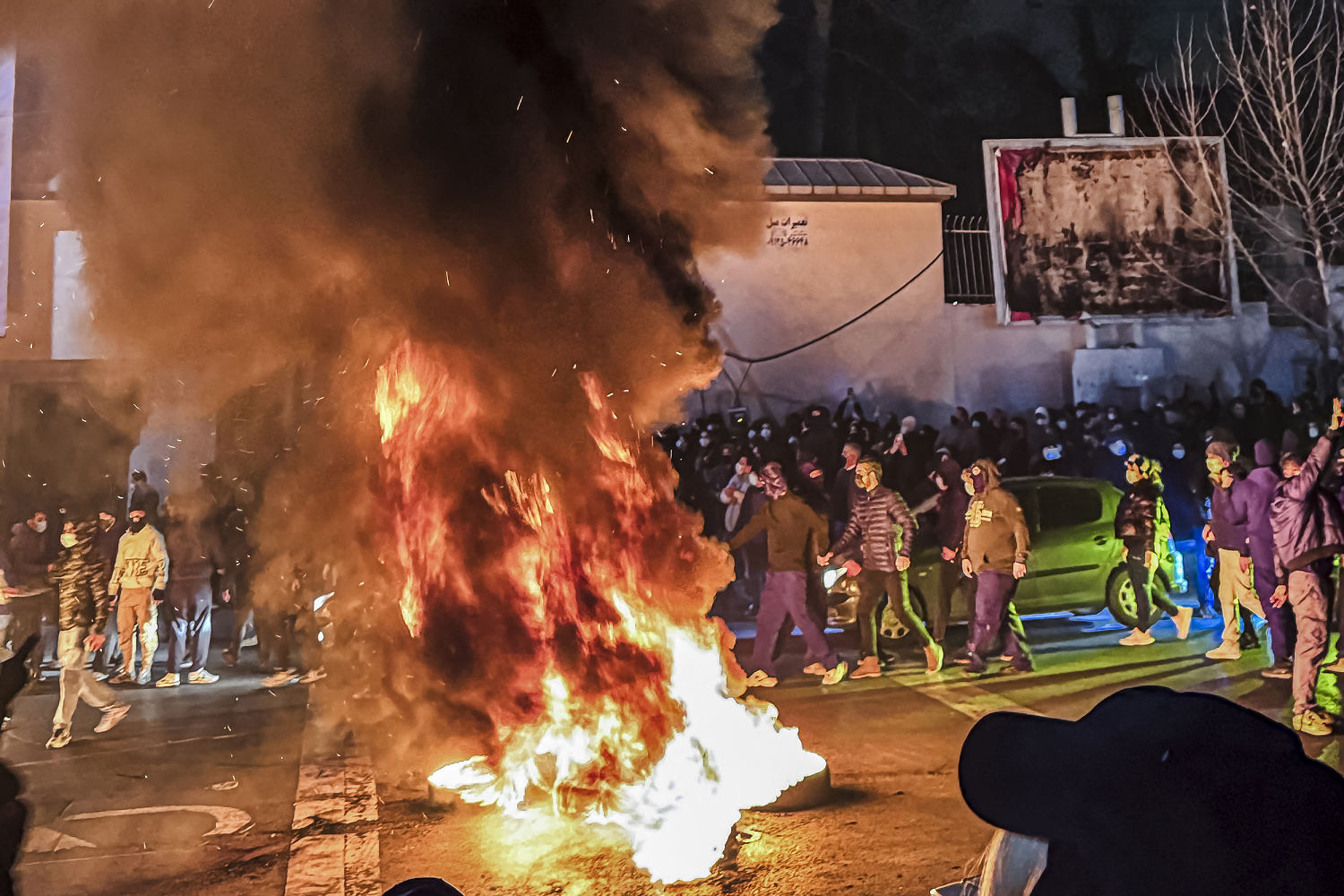
He added that he thought that over 1,000 people have been killed in Tehran since Thursday based on the information he has received. He had also heard disturbing messages from colleagues in Tehran and Mashhad, Iran's second largest city, he said.
"They were saying 20 dead people just arrived, all were headshots. And I was like, 'What is going on? These are protests. Why are they doing headshots?'" Mirhadi said.
"Everybody was saying now they're using real guns, there's no more pellets," he added. "It's bullets with rifles, pistols, handguns, shotguns. And people are dying on the scene."
